The Daves of Division Two

When Roger Lloyd-Pack passed away in January of this year he left behind not only a serious acting career (roles with the Royal Shakespeare Company and The National Theatre) but a comedy legacy. Colin ‘Trigger’ Ball, as he was known to adoring fans of John Sullivan’s Only Fools and Horses, was famous for his innocent yet howling one-liners; “What’s the name of that bloke who invented the Dyson vacuum cleaner?” just one of the masterfully-scripted scores.

Better known for addressing Nicholas Lyndhurst’s character, Rodney Trotter as ‘Dave’, Lloyd-Pack demonstrated the immensity of playing the low-IQ, straight man. Like a barman using the default of ‘John’ to unfamiliar faces, perhaps the Peckham road sweeper was trying to keep his life simple and manageable.

There are plenty of Daves in this world – very few Rodneys. This is evidenced by a quick glance at the player names in Division Two of the Bolton League. The Rodneys are outnumbered by five to one (more than 20 to 1 across the entire league). It is for this reason and in honour of the blue-suited Trigger that I will concentrate this piece of journalism on the table-tennising Daves.

Their records appear quite rotten on first inspection – almost reinforcing the plight of being a ‘Dave’. But then you look beneath the surface, as with most things, and realise there are various stories afoot.


Battle of the Daves’      Team                Played            Won              Win%age

David Cain                  Ramsbottom D          36                    15                    42%

David Jones                Bolton Uni B               48                    13                    27%

David Brookes           Harper Brass A         15                      1                       7%

David Mottershead Bolton Uni B             15                      0                       0%

Dave Rogers                FarnworthSC A        15                      0                       0%


David Cain, old warrior that he is, has returned to the game almost full-time after a decade out. Funny bat, ‘holiday’ legs, the Ramsbottom man has held his own with a notable ‘double’ over Tony Eardley and big wins against Gary Hilton, John Birchall, John Cole and Stephen Hunt. His win percentage at 42 is respectable indeed and puts him top of the Dave table.

David Jones – the burly bruiser playing for BoltonUniversity – whilst suffering a dip in form since December (just two wins from twenty-four matches) is a handful for anyone. The hard-hitting Farnworth man, playing up a division from last season has been unfortunate to lose six out of seven five-setters whilst on that run.

Such stats become psychological. His losses over the season to patient players such as Brian Greenhalgh and Alan Bradshaw perhaps tell the tale but his Division Two win percentage of 27% is still a ratio-busting figure when compared to last season’s 33% in Division Three.

David Brookes is the enigma of the bunch for me. A bit-part player (loves his handball and holidays), the Harper man is possibly a victim of never quite ‘getting going’ or having a sustained run in the team. His one victory, a truly uplifting five-set win against the might of 58% man, Gary Hilton was remarkable yet somehow demonstrative of better things to come. The father of Premier demon, Jordan, David quite simply needs to replicate his son’s killer instinct.

The remaining Daves – Mottershead and Rogers – although yet to record a win between them this season should be applauded for taking a set off Gillian Marsden and Bob Waller respectively.

Watch out, Rodney Hall (60%) – they’re gunning for you!
 

Fleetwood Town 0 AFC Wimbledon 0: Torturous to Some


grumbler

Unusual for Graham Alexander to employ such a system: 3-5-2 (inevitably becoming 5-3-2); Alan Goodall, the old pro, sat between the centre halves rather than in front of the back four. But the wingbacks – were they conversant in the silky skills required to penetrate deep into opposition territory? Alas – not today. And the three man midfield – Murdoch, Sarcevic and new boy, Bobby Grant. Did they live by the psychic code of all great midfields? Were they each aware of the others’ movement and concession of space? Did they… gel? Not particularly.

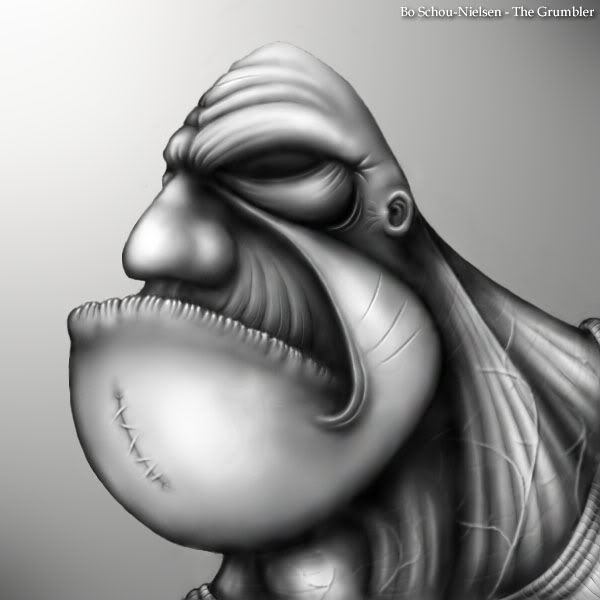
I sat next to the grumbler of all grumblers today or rather an old man kitted out in sarcasm and negativity. It wasn’t pleasant. “£300,000 for Matt. £150,000 for Cresswell. What for?!” I am a team’s biggest critic but I at least know that players mostly feed off a crowd’s enthusiasm. To not expect anything from these “lumpen cart horses” in front of him or have one word of belief – it astounded me. Why had he been coming for 6 years?

He had been trussed up in the dangerous designs of having a ‘divine right’ to win. He had been spoilt. Was Fleetwood’s miraculous rise from the tenth tier to the fourth in a matter of fifteen years not there to be celebrated by the spectacle of each and every opponent to grace Highbury’s pitch? Wasn’t the visiting might of old giants like Portsmouth, Plymouth and Oxford enough? What did the old bugger expect? An easy stroll to the Championship?

From 100 fans to 3000. It was a fairy tale. The stands. The community. The set up. The brazen red letters on each programme – CODARMY. Not ‘Fleetwood’ made large font but a sign, a message to the opposition that we are together and prepared to graft and utilise every last ounce of sweat.

Expectation levels sometimes enter a realm which doesn’t entirely inhabit the real world. The young become impatient. The old offset their physical difficulties by moaning at able-bodied men. Some fans – most notably the proud, singing and bobbing unit in the centre of the Memorial Stand (accompanied by the beating of a war drum) – truly act as the 12th man. They understand that where we are is special. They do not take league status lightly. To be in one of the top four divisions of English football – by Christ, that is something for a town of this size.

Promotion to League One? Let us dream – yes. Let us try to sustain this momentum. Let us exploit whatever bricks have fallen into place. But booing if things go wrong, an attempt at humour with the dried-husk words of a menacing cynic? Leave them at home.

The team is trying. There are twenty-three different flavours, tastes and styles to contend with. Sometimes we’ll balls it up. Sometimes it will look bloody awful. But this was never meant to be choreography or theatre. It is blood and thunder, luck, random ideas, attrition – organised chaos with a circular piece of leather being thrust around the turf.

Did I curse Alexander for his tactics today? A little. Did I wonder why the hell he persists with two big men up front? Absolutely. Was I aware that the team void of Jeff Hughes and David Ball looks decidedly mediocre and without sufficient drive? You bloody betcha. Did I have my head down at the final whistle or rejoice in the contribution of our terrier and no.22 spark, Matty Hughes? Without doubt, the latter.

I applauded the team off the field despite my disappointment at only gaining a draw. I trumpeted individual performances which offered hope irrespective of the dip in form.

Can this team still gain automatic promotion? Yes. What if it’s only the play-offs or worse given the charge of Plymouth? We’ll live with it, regroup, understand just how far we’ve come, fully comprehend the privilege of playing in League Two.

And The Grumbler? A man I will have to sit next to for the Portsmouth and Rochdale games having pre-booked the tickets.

I will get my son to smear a hotdog in his face accidentally if he doesn’t see something in Fleetwood’s play – a blessed chunk of what I see every week; the player desperately working towards a cohesive unit; the slick passing of Big Jon Parkin (on a good day); the threat of Charlie Taylor when he smells a lack of speed; the bursting and compensatory runs of Gareth Evans in the knowledge that we do not possess any traditional wingers.

If he doesn’t see this, then feed him to the Kop. Cod Army! Cod Army! Cod Army!


Giant Killers Warm Up before their Big Day

giant k

Division Four

Hilton ‘L’                      3

Harper Brass ‘C’      6

Fifty years ago Oxford United knocked Blackburn Rovers out of the FA Cup 3-1 in what was arguably the biggest giant killing act in cup history. It was Division Four versus Division One – a team in only their second season of league football against established internationals.

Forget Wrexham/Arsenal (1992), Sutton United/Coventry City (1989), Wimbledon/Liverpool (1988) and Colchester/Leeds (1971). That afternoon at the Manor Ground in 1964, although perhaps not etched in modern minds, was cataclysmic – a real blueprint and precursor to Match of the Day stunners.

Hilton ‘L’, bottom of the table tennis tree, languishing in 12th place in Division Four, have had a run in the Warburton Cup (the local equivalent of the FA Cup) which has reverberated around the ‘grounds’ and will be highlighted in the table tennis annals should they go all the way.

Semi-finalists, dispensing with opposition in all three of the top divisions, Hilton ‘L’ have surprised many since their 2nd round defeat of seasoned Premier outfit, Burning Desire. That result (396.5 – 396), whilst incredibly tight and some might say fortuitous, maybe anchored itself to a greater destiny.

A young squad, the core of which is represented by 15-year-olds Thomas Field, Jason Hill and Robert Shaw, Hilton are developing at a good pace and showing the flair and belief of a close knit unit. Diplomatic squad rotation tonight from coach, Brian Young means that Hill sits it out – replaced by the youngest member of the team at just fourteen (and the boy with two surnames), Harrison Jones.

The tactical shifting of Harper Brass’s top player, Faizan Bhura to no.2 on the card results in an opening ‘big guns’ clash between Field and Bhura – a match that would normally see out the evening.

Field, blue and white Stiga top, slightly roguish gelled hair, does not look fazed. Opposite is a 75% man in mean, Nike orange-striped trainers, yet his polished technique copes admirably. 10-12. Damn unlucky; noticeable fight in the youngster when 4-8 down. Field knows that he has to have these scraps in order to rise and test himself properly.

8-11. 9-11. It is commendable from Field – not enough, but extremely encouraging. Bhura, quite simply, is match savvy. Even at 5-1 down in the third he retained his cool, played the same strokes.

Shaw versus Haroon Khan next – a decade separates them in age. The blonde, Hilton lad (grey joggers) has an austere aura to him. He knows the standards he wishes to attain, yet the path to them may unduly frustrate. 6-11. 11-8. Shaw’s whipping forehand sends a warning out to Khan.

Khan, always upbeat, enjoying his third and finest season in the league, thinks he has this opponent despite the mishap of the second. His game has improved drastically – the soft backhand is no more and the deep, arching southpaw shots have a beautiful, navigational quality. 6-11. 4-11. Too much for Shaw.

Enter the saviour, Jones – unfancied, modest stats and up against the loquacious Kaushik Makwana (55%). 11-4: Persistent smashes. 8-11: Makwana sweeping backhands. 11-7: Improved feet from Jones. 10-12: Cruel. 11-9: Always in the locker!

It is hardly Oxford United (plus Harper win on the night). But the promise, the dream – that lives on.


Knowing the Numbers

numbers

My maths teacher was given the nickname or moniker, ‘Chewbacca’ in the late 1970s. He was a tall, slim, hairy, quick-witted gent with the arm span of a light aircraft.

His classes were simple, but technical affairs. We would stand at the front in height order as if part of a Two Ronnies’ sketch in an effort to find the mean, median and mode. His swashbuckling system extended to other demonstrative feats when it came to algebra, calculus and trigonometry.

He wore glasses, BHS shirts and had the inside leg measurement of an electricity pylon, yet his extraordinary skills and personality I had not seen before and would not see again.

It is true to say that without Peter Richardson, I would have had nowhere to go, no self-belief and certainly no faith in the large, authoritarian figures who marshalled the classrooms.

As it was, numbers were the early calling. I could seemingly make them dance, perform and adequately limber up thus shaking out x’s value from deep within a quadratic equation.

My arch enemy and nemesis was Wendy Coupe (possibly spelt incorrectly but it rhymed with ‘chicken coop’). On leaving school, I heard that she’d become a bookie. True to form, although thirteen years later, I became a stockbroker.

We were still, in essence, battling away. She was taking bets. I was – let’s not kid ourselves – doing much the same. We stared at our respective screens and slowly developed a keener sense of numbers than ever before. Chewbacca had given us a leg up into these strange industries.

When the online exchange, Betfair was founded (2000) it presented an opportunity for the diffident yet sophisticated gambler to really examine this curious world – look through the swathes of numbers and decide which represented value. Or to put it bluntly, which were alarmingly but beautifully wrong.

The decimal odds (fancier than fraction odds) enabled me to create a spreadsheet with various bet/lay profit and loss projections which instantly told me what I stood to make were I to close out the position ‘in-play’. This was useful for football particularly but led to punts on cricket and tennis.

In October 2005, I noticed that Australia and the ICC World XI were both bobbing around Evens (2.0) for the proposed 6-day test at the Syndey Cricket Ground. Such numbers seemed ludicrous. Australia were a force, they were at home and they were also, crucially, a team that had played together before. Against Smith, Sehwag, Dravid, Lara, Flintoff, Muralitharan and the like they were dominant – breezing home by 210 runs with two days to spare.

My bigger bet three years later (Wimbledon 2008) had Rafael Nadal pre-French Open at around 7/1 (8.0). For a young man slowly coming to terms with grass, the figures quite simply were wrong. (Easy to say after the relief of a 6-4,6-4,6-7,6-7,9-7 final win over Federer!)

Now, it is the table tennis world which has shook me. I have looked at the Division Two scorecard (8th-placed Ladybridge ‘B’ 9 vs 1st-placed Hilton ‘E’ 0) over and over again and it just does not stack up. I would not use the word ‘irregular’ as that would bring into question the professionalism of my fellow players, but peculiar, abnormal, unusual, astonishing – yes.

Coupe would have had such a result at 100/1.


Farnworth on Fire

Little Lever CC ‘B’  5
Hilton ‘C’                     4

Of the 77 points now accumulated by Little Lever, a slight majority (40) have been won on the road. This would suggest that visiting teams take great delight in driving along the aptly-named Victory Road to the Little Lever lair.

Not tonight. Bethany Farnworth is waiting for them like the apoplectic owner of a house about to be burgled. The sleek 15-year-old may appear humble and graceful, yet underneath this deceptive demeanour is a long-limbed warrior, a young ETTA-ranked woman with something to prove each match.

Turning left through the wrought iron gates clasped by the imposing letters ‘LLCC’, you immediately get the sense that you are entering a club with a great history. Indeed, Sir Garfield Sobers played here – as he did more famously with Radcliffe Cricket Club just up the road.

In the shrouded darkness, filled with heavy rain, the weaving track up to the clubhouse could be leading you anywhere – to a country estate, a regal manor or Count Dracula’s castle in the Carpathian Mountains. Lightning doesn’t strike, thank god, when home captain, Paul Tatlock finally skids next to the building in his Citroen C4 at 7.29pm.

We struggle to get inside. One of the bolt locks refuses to budge and so the metal grill cannot be lifted to gain access to the door. Tatlock looks genuinely worried. There is an uncanny resemblance to Bob Parr in both his frame and face. Incredible it would be right now to just get this show on the road.

A second Paul arrives with great mastery of the said lock and sure enough, we are in. It feels like a changing room. It is a changing room, I am told – two of them joined together courtesy of a retreating divide. A terracotta-tiled floor greets the players, along with the feeling that a crazed interior designer with a penchant for red has been allowed inside.

The first match is Tatlock versus Hilton’s impeccably-attired Chris Naylor. The fury of both players is evident: “Oh, no – what’s going on? Come on” “Nooooo!!” “So slow” “Greedy” “Move your body”. 12-10,8-11,11-7,6-11. Tatlock is breathing heavily. This is uncomfortable territory. His Velvet Underground T-shirt is soaked already. The final set leaves him demoralised: 1-11.

Bethany Farnworth (red top) takes her position against Annie Hudson (blue) next. It is the neutral’s showdown with a hint of ‘Merseyside derby’ about it. Their win percentages are 62% and 90% and such stats account for the early Hudson dominance (11-6,11-6); trademark forehands swatting and dismissive. I confess to writing off Farnworth’s chances at this point. She seems a little disparate, not quite the force I had expected.

“Hit it harder,” comes the simple advice from teammate, Richard Simmons. 11-9,11-5. Instinctive backhand returns, great reach and a quiet steeliness get Farnworth back into it. There is, all of a sudden, a Mediterranean-like poise to this girl. Neither player deserves to lose such is the grand spectacle before us, but it is Farnworth who toils with her deadly forehand to the end: 11-9.

“Flippin’ eck!!!!!”

Div One – Top 7      P     W   L     F     A         Pts
Coburg                       16    16   0    96  48        96
Hilton C                     16    10  6     88  56        88
———————————————————————–
Standish                    15      9   6     85  50        85
Heaton A                  16   10   6     81  63       81
Hilton B                     14     9   5     80  46        80
Nomads C                16     9   7     78  66        78
Little Lever CC B  16    8   8     77  67         77

Movers and Shakers II

Continuing this column in relation to the Blackpool manager’s job, I think the point I was trying to make is that the higher you climb in most disciplines, the harder it gets.

You are often barracked and jolted – left weary, yet with a better understanding of yourself. This is borne out in the following table which displays the average win percentage ratios when a player moves up a table tennis division:

                                                                Ratios*

Division                     2011/12-2012/13    2012/13-2013/14    Average

One > Premier                     4.07                            4.15                     4.11

Two > One                            4.02                            2.53                     3.27

Three > Two                         2.99                            1.83                     2.41

Four > Three                        1.65                            1.81                     1.73

  • Each number based on data from 4-7 players

Player ‘A’ in the 2011/12 season for example might think himself a giant with an 80% win record in Division Four, but the likelihood is that this would be reduced to a mere 48% once in Division Three (80 divided by 1.65).

If the same player were to go even higher, his figure would tumble by a ratio of 2.99 to just 16% and that is before the fierce winds of Division One and the Premier host his talents (if ever) indicating a final figure of just 1%.

It is a relatively straightforward methodology ascertained using limited player data, but it quite uncannily reveals across two sets of statistics (over nearly three seasons) the increasing difficulty of rising the divisions, thus reaching the top.

Jumping from Four to Three and One to the Premier seems particularly consistent, however going from Three to Two or Two to One would appear to have got easier judging from the declining ratios. That is one theory anyway. Another is that the players going up are technically better prepared.

Mike Audsley of Meadow Ben B is a good example of this (ratio 1.17 between 2011-13) and with the 2013/14 season yet to finish, Hilton E’s Wilson Parker currently stands at an impressively low ratio of just 1.05 (96.30% divided by 91.67%).

Such figures obviously pull down the overall average but they also stand as a testament to good coaching, commitment, belief and a solid dream; categories/virtues I know young Parker has in abundance (strong parental support being another key factor I would suggest).

This leans into a conversation I had with Bury cricketer, Matthew Metcalfe the other day concerning success and its key ingredients. He was fortunate to attend a talk in Salford by three-time Super League Grand Final winner, Brian Noble during which Nobby (as he is affectionately known) alluded to the absolute need for a dream or vision.

No matter how much rhetoric you provide to an athlete or player, there has to be an overriding vision that the team can buy into; not a cheap, prescriptive gimmick but rather a firm, achievable target – genuine desire on the part of the collective.

I have scoured the divisions and spoken to numerous people in an effort to understand what exactly it is that undermines or improves a person’s win percentage. Many answers have come back (respectively): a broken bat; demanding shifts at work pre-match; refusing to give up even at 10-6 down; playing in both the Bolton and Bury leagues; more practice; strength, mental agility and experience; incentive of winning the division.

My conclusion? Bluff generally only impresses a bluffer. No interview with Karl Oyston thus far.


Movers and Shakers I

yeboah II

I applied for the Blackpool manager’s job via email on Thursday, 23rd January at 1.59pm. I have worked for enough bounders with no foresight, vision or inventiveness to know that it was time for the little man to have his day.

Eleven minutes later, I received a response from the chairman’s PA, Dawn Butterworth advising me that without the necessary coaching badges such an appointment was “impossible”. I quickly pointed out that badges can be taken after the appointment and she conceded some ground citing the James Beattie case at Accrington Stanley (a fine and qualifications deadline).

Completing FA Level 1 (32 hrs), Levels 2 & 3 (UEFA B Licence – 165 hrs) and then the UEFA A Licence (Championship managers and above) which is run over 21 days would take some doing, but for the sake of a modest 18-month contract on £5000 a week, I was prepared for the hardship.

My communication to Karl Oyston consisted of numerous points: my understanding of the game having watched football since the 1978 World Cup final; a pedigree in terms of success (don’t laugh – golf Junior Knockout winner at Breightmet Golf Club in1986 & back-to-back table tennis promotions in the Bolton League 2011-2013); a head for numbers; knowledge of great footballing debuts.

It was the latter along with my firm belief that a sharp scouting eye is more important than having played professionally that I wished to press home (straight from the Arsene Wenger school of management).

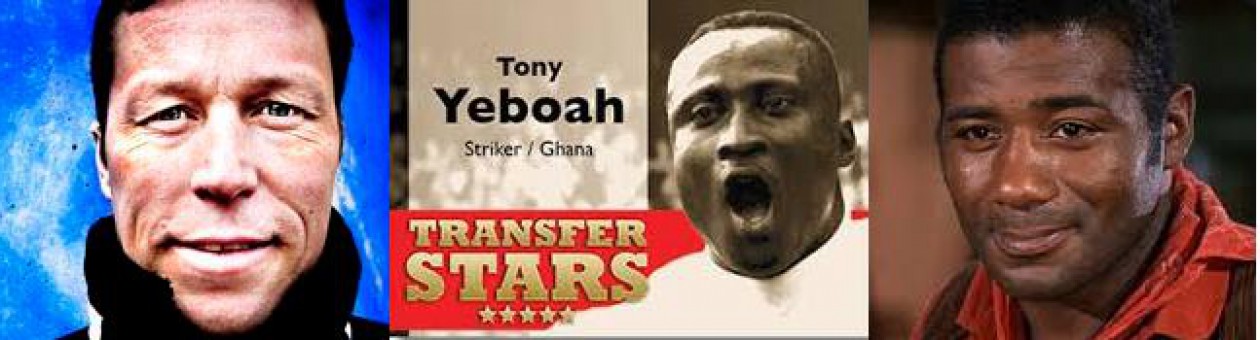
I have had the privilege of witnessing Eric Cantona play in a Leeds United shirt for the first time at BoundaryPark in February 1992. Three years later I was mesmerized by the presence of Tony Yeboah scoring his debut goal at Old Trafford. In 2000, it was the turn of Rio Ferdinand making his home bow in a more sensible 4-4-2 formation (following the disastrous 3-5-2 employed at Filbert Street). A strutting, more confident centre half I had never seen.

All these players – as long-time fans of BWFC will know having seen the sublime skills of Jay-Jay Okocha – had one huge, seismic quality in common: they were able to excite. Their presence and audaciousness was from another world. To quote Jon Howe: “Like Cantona before him, the reverberations from Yeboah’s arrival were so immediate, so openly emotional and so telling.”

Finding such greatness within the ranks of the current Blackpool squad was my aim – players maybe rashly overlooked, footballers just not motivated correctly, men simply played out of position or psychologically strangled by the existing system. Could I put myself alongside the bookies favourites’ Micky Adams, Barry Ferguson and Karl Robinson? Yes – why the hell not. Was I delusional? Only in part.

I kindly included a list of transfer targets given the impending deadline: Tom Eaves; Josh Vela; Craig Dawson; Ivan Klasnic. I would fool Freedman into releasing the first two for a pittance. We would have our rock, Dawson. And Klasnic – the perfect foil for Eaves – would light up a crowd once more.

What has this got to do with table tennis? Did I even get an interview? I will tell you next week.


Grimwood Reaps Warburton Cup Q/F Spot

Warburton Cup (last 16)

Radcliffe   396

Boyzone    425½

It is a tough ask for any team to concede an average of only 2 ½ points per set. But that is what Radcliffe (currently 3rd in the Premier Division) were asked to do tonight. Playing against the relegation-threatened Division Three side, Boyzone (handicap 301.5), they had home advantage however, the services of topspin king, Rob Hall and the knowledge that a well-brewed pint was waiting for them next door.

Boyzone entered this venue looking a tiny bit sheepish, half-wary of what was in store. Horror stories of Premier beatings regularly circulate in the lesser table tennis dens – tales of humiliation, of forced retirement and exposing half-decent players as quivering buffoons.

Manoeuvring your way to this venue is a job in itself. Once past The Unicorn public house you hang a left opposite Next Frydays Fish & Chip Shop and proceed to rumble across a cobbled track before the real assault course of 100 pot holes begins. Making it into the car park you are met by a flood of darkness, a stargazer’s paradise and the seemingly phantom presence of Jim Chadwick.

“Hello.” Jim is a pleasant chap, a perfect ambassador for this great sport. He shows me inside what at first appears to be a large, corrugated container. The dainty, green-check curtains immediately stand out; behind them and the windows, security grills perhaps alarming to a cultivated crowd.

Other items give this place an absurd yet comfortable aura: the World of Ice Cream freezer stood randomly by the door; the white-beamed ceiling; the six fluorescent kitchen lights. And that is before we witness the splendid ‘triple jump’ knee-high socks of visiting player, Vinny Merrit (children’s nursery proprietor by day, entertainer by night).

Hall gets the play underway against Matthew Brown and things immediately look ominous. Hall prefers the two-shot rally, has the ability to reverse most push shots at incredible speed. Such play numbs the opponent – has them wondering how to live with such fire. Brown has no answer yet scrambles sufficient points (3-11,2-11,4-11,2-11).

It is Radcliffe’s Michael Dore now. He has the build of Kenneth Clarke, hair of a chimney sweeper. A more patient player than Hall, he waits for the correct ball height before throwing himself into the shot. Too much respect perhaps, but then Jez Grimwood is a lower league heavyweight, a solid counter-hitter. Dore loses crucial points in the second: 11-2,11-7,11-3,11-2.

Gabriel Wilding has to salvage something now – indulge in the rampant slaughter of Merrit. Therein lies the problem. Merrit is useful. Most table tennis players are useful. His backhand shows great menace and it is another middle set which nicks crucial points: 2-11,3-11,9-11,2-11.

Brown picks up a further 27 points. He has the intense look of a highlander defending his patch. Merrit jokes his way to another 17. But it is kitchen designer, Grimwood (tape-measure in back pocket) who sees Boyzone home (39).

The old mill town and Mesolithic area rumbles. The River Irwell spills some of its load. Boyzone have entered this former coal-laden area and they have conquered!

Quarter Final Draw

Hilton L / Bolton Uni B Vs Standish

Meadow Ben C Vs Farnworth SC A

Little Lever C / Hilton G Vs Boyzone

Bolton Uni A / Harper Brass A Vs Heaton F


Hilton Raid Scuppers Farnworth Promotion

Division Three: Farnworth SC ‘B’ 3 Hilton ‘K’ 6

For a team who were looking good for promotion at Christmas but who were then savagely beaten by title favourites, Hilton ‘I’ 9-0 in the New Year, Farnworth needed a result tonight. They needed a show of mettle, an undaunted display of might – performances from the depths of both squad and body.

Living with the visitors up to match six (3-3) – in large part due to the experience of old hand, John Ainley – Farnworth had this teed up nicely, ready to sound the battle cry and edge to victory.

Cue the unluckiest player in the league, Farnworth’s David End losing his third five-setter of the night, Ainley missing his treble and Hilton’s Brian Young with a born-again performance against John Rothwell.

One of the trickier venues, Farnworth Social Circle Cricket Club has an ‘under the stairs’ feel to it. To enter its table tennis bosom is to be met by paraphernalia not exactly crucial to the great game: stacks of plaster board behind the door; folded-up buffet tables; odd-shaped pieces of wood leaning against the wall; one orange life ring.

Whether this is strategic, part of the intimidatory armour, I do not know. The faces seem welcoming enough, as do the eight coat hangers – rare practical assets in this cubbyhole – yet beyond the minor pleasantries one senses the need for a power shift within this club, a firm separation of lines between cricket and table tennis.

Hilton’s Mathew Fishwick, 85% man and fourth finest player in Division Three this season got this show on the road in his usual uncompromising style. Fishwick is a human wall, a table tennis automaton. He must have played each shot thousands of times now and such dedication tends to sink opponents. Rothwell, deep-serving maestro, was fortunate to take one set: 6-11,9-11,11-8, 7-11.

Jeff Saunders – digger of the ball, a lower-league Jeff Craighill in terms of style – playing his first away match ever, will perhaps stay at home in future with the knowledge that low ceilings are routine annoyances ‘on the road’ and do not suit his game. Ainley, the wily, bespectacled man with a scooped push courtesy of his rotating, Gorilla-like arm proved to be too much: 11-5,4-11,11-7,11-9.

Enter not ‘The Special One’ but ‘The Unlucky One’. David End, Farnworth’s no.4 is half the size and has half the stats of usual incumbent, Carl Bennett. To see him play, however, is to respect his audacious looping style. Regular whispers emanate from him (“Rubbish. Rubbish.”) and you can see the demons plying their trade in his company. He lost this one in horrible fashion to Young: 13-15,11-9,7-11,11-8,12-14.

Rothwell pulled Farnworth back into it by defeating Saunders (3-1). End did his usual five-set trick against Fishwick (2-3). And Ainley sneaked home versus Young (3-2).

Match seven (End versus Saunders – battle of the 1961 boys) was pivotal – the best spectacle of the night; attack versus defence (9-11,8-11,14-12,16-14). End had it (6-4 up in the fifth) but then the groan, the calamitous finish (7-11).

Division 3 ‘Top Six’

                                                P              W            L              F              A             Pts

1              Hilton I                  12           8              4              67           41           67

2              Lostock                 12           8              4              64           44           64

3              Heaton E               12           7              5              61           47           61

4              Hilton H                12           8              4              60           48           60

5              Farnworth SCB   13           6              7              59           58           59

6              Hilton K                13           9              4              59           58           59


The Willy Wonka of Season Tickets

That I can just turn up at one of twenty eight table tennis matches each week seems to me pretty special. I pour over the fixtures hoping for an interesting clash and then days later wheedle my way in – sometimes with trepidation, often in the knowledge I’ll see a familiar face, always conscious that I scribble too much down and risk missing the deeper story.

At times, gearing up to watch Premier and Division One matches is like walking into a private function room or board members’ and football managers’ bar. “Who the hell are you?” I sense them thinking. “Ever played at this level?” “Nobody” and “No” would be my answers. No access to the vintage whisky and wine or Cuban cigars therefore. No easy laughter – just the frozen air surrounding an impostor.

I exaggerate of course. The chocolate factory of table tennis venues is mostly welcoming. I was once offered a cup of coffee by Barry Walsh – Hilton’s sprightly elder statesman. And Richard Whittleworth of Walkden Methodists has hypnotic-like power over the Ladies’ Fellowship group there which shuffle in with the tea and biscuits at 8.30 prompt.

Comparing this prized, free, invisible season ticket with say, a 2013/14 Reebok Stadium pass or regular visits to the dark side (Old Trafford) or even Fleetwood’s Highbury Stadium is credible, however. I cannot promise the cultured movement of Tim Ream, the mega-signings of slothful, rich kids, or the reassuringly charming Captain Pugwash music each time a point is scored. What I can do is guide you through Bolton’s network of still blazing, sporting homes.

Hilton Table Tennis Centre is where the journey must begin. Home to 22 of the league’s 58 sides, it is now entrenched in Horwich’s history – up there with Rivington Pike, Winter Hill, the town’s first-built locomotive (1887) and The Blundell Arms to my mind. An unassuming building, a discreet location in the back streets yards from Aldi, yet inside – the perfect floor, lighting, tables, nets and dividing curtains; a true Mecca with matches played each week night.

Harper Green Leisure Centre is next in size. Exactly nine miles from the table tennis capital, Farnworth’s multi-sport venue is years behind the master, yet shows signs of developing young talent and a true thirst for the game courtesy of 13-year-old ‘D’ team player, Keane Mills and others.

The smaller venues have their quirks and humorous betrothals as you enter. Heaton Cricket Club has something of the operating theatre about it. At the same time, descending those steps to the ‘cellar’ can feel like walking into The Crucible.

Ramsbottom, as I have alluded to before, is quite a sodden place offset slightly by the pleasant drive there.

Here is my overall ‘Top 10’ for match nights:

Venue*                 Capacity      Pros                                     Cons

Hilton TTC                 5             Professional set up      Noise

Harper Green LC    3            Gymnasium space         Lighting/Distractions

Walkden MC             1            Modern and spacious  Lighting (angled)

Ladybridge CC         2            Good length                       Low ceiling

Bolton L&G Club    3             Space                                     Noise/Human traffic

Heaton CC                 1             Separate to spectators   Overall size

St Paul’s Peel PH    1              Peaceful                               Setting up table

Lostock TC                  1             Very private                   Table/Low ceiling

Meadow Hill TC      1             Intensity                            Temperature/Length

Ramsbottom TCC  1              Sufficient seating        Temperature/Length

* Albany TTC, Farnworth SCCC, Flixton CC, Little Lever CC, Radcliffe CC & Wharton URC – yet to be assessed.