Category Archives: PRD

Faizan Bhura: The Diminutive Warrior

faizan


The names of the Nobel Prize nominees are not revealed until 50 years after the event. This adds a certain fascination to the awards given out. Who did the eventual winner beat? Was he or she up against the cream?

Away from the bookies’ chalk and inside the Swedish Academy papers are passed around and eyebrows arched enquiringly. The initial list is cumbersome – it includes around 200 potential laureates selected by professors, society presidents, previous winners and academy members. This is whittled down to a ‘long list’ of 15-20 preliminary candidates in April and then a ‘short list’ of 5 final candidates in May.

Much rigour and due process takes place and that is before the three months of reading and assessment which occurs in order to prepare reports and discuss the merits of each candidate.

It would be nice to think that similar levels of deliberation and brooding happened prior to and on Friday, 27th March at the pre-Finals committee meeting. Present were officers Alan Bradshaw, John and Margaret Scowcroft, George Berry, Jean Smart and head honchos Roy Caswell and Brett Haslam.

On these shoulders rested the fates of the season’s big-name players – most challengingly who was to be engraved on The Albert Howcroft Trophy for Most Improved Player. Not an easy thing to decide. An algorithm can only churn out an unloved number. It does not factor in personal circumstances, the general feeling amongst your peers and the inevitable politics that prevail.

‘It’s a bit like politics and statistics. Which way do you jump?’ General Secretary Caswell admitted with redoubtable insight into the workings of the loyal few that give up their Fridays. Which way indeed when the list is so strong, so full of games revamped?

Six candidates shone across the five Bolton divisions: Robert Shaw (Div4, from 8 to 42%); Keane Mills (74 to 100%); Nathan Rhodes (29 to 70%); Christopher Boys (Div4, 80% to Div3, 51%); Faizan Bhura (Div4, 72% to Div3, 58%); Ray Isherwood (Div2, 27 to 68%). It was Bhura, however, who impressed the old guard. ‘In the end we all just looked at each other and went for Faizan.’

Science perhaps left at the door, but then in the 4’ 11” Bhura they have made a genuine discovery. ‘I always do rubbish in the [pre-match warm-ups]. I make them think my technique is not good at all and then when the match is ready I pull my socks up and turn my brain into gear. That’s what I do.’

‘A proper kidder,’ to quote Scott Brown. Too dry to read at times, but there with his secret weapon – his consistent forehand.

You can get a thousand sentences from Bhura on the game and how he has tracked its idiosyncrasies from the age of 12 – charming, colloquial passages that reach out and shatter any sense of smoothness. All that matters though is his devotion to table tennis, his 1994 Bolton-born (Indian mother/Zambian father) bones that have lifted this trophy once held by Andrea Holt.
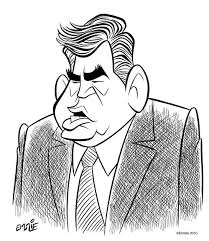
 

‘Mild’ Max Brooks

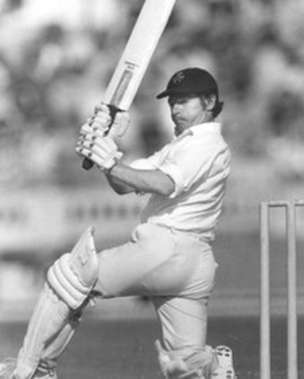
harry pilling granddad of max brooks


Max Brooks knows very little about Rocky Balboa yet skips five times a week – outside, near the back gate. Such rhythmic poise augments his low centre of gravity and remarkable balance. He claims to stand 5’ 6” tall although one suspects that underneath the slicked-back, mountainous hair he is actually 5’ 5.

The grandson of treasured Lancashire cricketer Harry Pilling (himself a dynamic 5’ 3” [pictured]) and professional ice skater Yvonne Rayner, Max has a blood line that almost forcibly places a sporting implement in his hand. After first picking up a table tennis bat at the age of ten, however, he soon lost interest.

Smooth trajectories rarely chart a player’s career. Most of the time it is a rugged path forward – a Snakes and Ladders board – full of pitfalls, hard dice and the odd bit of luck. Max’s serendipity came in the form of Sport England visiting his Tottington school two years later, informing him that he “had some talent for the game”. This neutral observation acted as a stimulus, a catalyst to where he is now.

Awarded the Ralph Palmer Memorial Trophy in early April as Bolton’s ‘Most Promising Junior of the Season’, Master Brooks – still just 15-years-old – took 44 scalps out of 45 in Division Three; his one blemish losing to the Austrian, Bernd Dumpelnik two weeks before Christmas when gifts are traditionally wrapped up in readiness for handing out.

Such an ascent into the annals of Bolton’s history (and indeed Bury’s if you consider his 49/57 win record with Seedfield in its equivalent division) has largely come about not as a result of any fortunate DNA, but rather through the guidance of surviving paternal grandfather, Mel Brooks (now 73). ‘Grampa Mel started me off at Heaton CC. Both grampas have been role models in helping me achieve my goals.’

Max’s approach to the game is surprisingly serene. There is none of the ‘mad’ or mercurial synonymous with such a christening. ‘Mental toughness and never, never give up – play for every point,’ he casually elucidates. Intensity doesn’t ride with the words but instead an internal grit and indomitable belief. It is the same when discussing education (refusing to fuss and be drawn on his favourite maths discipline): ‘All maths I enjoy. It will be what I need when I start work.’

The pragmatic side of him is startling in part – perhaps too clean or manufactured. But then, as Grampa Mel – chief mentor and disciple of Cliff Booth – tells me, returning to the main subject: ‘We spend time discussing strategy and the mental side of the game. He is like a sponge for taking in information, though being his own man he sometimes tries other things.’

Holding the Ralph Palmer trophy is like a ten-year pass to beautiful things – a soft guarantee of climbing the divisions. Big names have gone before Max including England’s Andrew Rushton (1996/97) – had their names inscribed on the silver plate.

A ‘B-game’ is what is required now. ‘He needs to dig short and develop an aggressive backhand block and kill,’ coach Brooks asserts. As for the skipping (3×40) – that will continue.


Keane Mills: The 100% Kid

dour scot

He has the hard jaw of youth – an almost inert face that gives very little away. After speaking to him, you do not get the sense that he has won anything, but rather lost. There is a bit of the dour Scot in him – a solemn, behind-the-eyes weighing up of events. And yet he is a Boltonian, a successful English lad who has walked through his home town’s 4th division untrammeled and unbeaten.

Keane Mills, 15-years-old and 5’9” tall – a product of the Harper Brass stable (along with team mates Ellis Longworth and Nathan Rhodes) – has done something only two other people have done in recent years: he has gone through a full season without losing. Two extremes of the table tennis circuit seem to cosset such triumph – the Premier Division and Division Four; Michael Moir and John Nuttall earlier beneficiaries of the grandeur.

Mills is a special case though. The title was confirmed on April Fools’ Day when he was still 14 – eight years ahead of 22-year-old Nuttall’s startling achievement in 2012/13. ‘No matter what age you are, you can still match the best,’ he believes and asserts in equal measure – the candour not exactly pouring from him, but offering a rare glimpse of his conviction. ‘I show everyone respect and expect it back and I don’t show my anger as I believe it is a weakness. If you lose your head, you lose the game.’

It is this maturity and precocious flowering which has seemingly led him to where he is now: the recipient of a ‘Double’ in only his second league season (Harper Brass ‘D’ securing the Ron Hindle Trophy days after their title win). Indeed, he claims to have picked up a bat for the first time a mere “two and a half years ago while on holiday” – his exceptional hand/eye coordination obvious to all.

Fellow players around the clubs beat the Mills’ drum. In describing ‘the 100% kid’ a consistent array of words passes their lips: steady; good temperament; right attitude; attacking; patient; level-headed; lots of potential; great serves; focused. These qualities alone cannot have built such a force, an emerging warlord when at the table. They perhaps complement the evident desire and ministrations that exude from him however.

Necessary, critical voices that stray from the consensus point to the young man’s middle game, his unforced errors and also the fact that his mobility seems to be, at times, like a granny reaching for the sweet tray. “He only moves a bit,” one source commented. But what if he only needs to move a bit thus regularly returns to his upright stance whilst flogging the opposition.

Keane is uncompromising: ‘I’m guessing I didn’t move much against this one person.’ The stats bear this out – just two of his 66 conquests have gone to five sets and they were in September. More impressively, he cares. When the title was briefly in the hands of rivals Polonia at 9.30pm on 31st March, he could not bear it: ‘My heart was in my mouth. I thought we had lost it and I was very frustrated.’


Bowing Out

Winston Churchill once referred to Clement Attlee as “A sheep in sheep’s clothing.” As I grow weary, old, fast approaching 45, more and more sheep seem to cross my path – mostly in the world of banking but in other areas too.

We all have small dreams. Mine from the age of 23 – sat in a New York hotel room listening to the blaring taxis down below – was to write a novel. A work about ‘the street’; society if you will. Despite my best efforts – five of them in fact – I ultimately failed.

And so began the drift – into table tennis reports after a ‘knock’ with friends. Into radio plays, children’s story poems, interviews with who I deemed to be the more interesting colleagues or pariahs at my place of work and short stories. Anything and everything: a lovely excuse to write and feel good, worthy even.

I recall approaching The Bolton News’s Neil Bonnar on 1st April 2013. I padded the email proposal with talk of New Journalism which unofficially began in 1962: Tom Wolfe picking up a copy of Esquire and reading a piece on Joe Louis, written by Gay Talese.

The article was mesmerising, intimate – a form of literary or ‘short story’ journalism. It was a turning point indeed, but such art was to be hounded out of fashion by 1981; fashion – that villainous word.

A few notable voices still held the torch aloft – the irreverent and mighty, Hugh McIlvanney on this side of the Atlantic for one; his prose allowing you to swim across the ably-depicted sporting scenes as if you were God. When you read McIlvanney’s work, you are forced to stop, gasp, relay the word combinations over and over in your head such is their allure.

My comparatively feeble samples – nine of them written between 2007 and 2008 – were included in the email to Bonnar in an attempt to ‘firm up’ negotiations and show him my wares, my ‘Del Boy’ goods. I had a habit of getting home after matches, taking a shower and then staying up ‘til about midnight dissecting what had unfolded.

I invented boyish nicknames for my friends, my opponents: Bazooka, Hustler, Alamo, Raider, The Destroyer, The Reverend; simple alliteration usually behind the grand title as if I imagined us walking out to lights and music.

Bonnar phoned me up one evening not too long after. The deal was cut. I was to follow in the footsteps of fine predecessors, Alan Calvert and Ian Wheeldon.

“Just try to be less flamboyant,” he advised me, referring to the work I had sent in (www.thesportswriter1.com).

I understood this. I didn’t entirely rail against it. Papers have codes to follow. Crossing the line into the semi-fantastical was unnecessary – it risked reputational damage.

Now, after writing a total of sixty-seven pieces for the paper – quite an apt number – I feel it is time to step down. The joy in sitting alongside players from the Premier Division through to Division Four has been a true privilege. Letting me into their modest venues has been kind and not always trumpeted in the manner it should have been.

New projects await me including the better nurturing of my family. I hope there is someone to pass the baton to in this rich, sporting garden.


Pathway to Quantity

People do good things. Help the blind across the road. Pick up change for old ladies. Hold doors open out of courtesy rather than coincidence.

Some volunteer. Give ten or twenty years of their life to causes they believe in. And occasionally, just occasionally, recognition shows up at the door.

Through luck, perception or merit people are handed certificates, badges, scrolls and chances to further their philanthropy.

Karen Edwards OBE is a case in point. Chief Executive of the Bolton Lads and Girls Club (BL&GC) and part of the Queen’s Birthday Honours list in 2012, she has put in a long shift, been imaginative, dogged and tenacious since the 1990s.

Spearheading a team (more recently) in control of a circa £3m budget, Ms Edwards has mostly looked after the coffers well – built relationships, developed her soft language skills with particular emphasis on words such as ‘opportunity’, ‘pathways’ and ‘evaluation’.

Her efforts overall should be furiously applauded.

But there is a gaping hole; a hole which only started to appear towards the middle of August. And the table tennis community is at a loss to explain it.

When the list of teams was compiled and sorted into five divisions for the forthcoming season, one noticeable absence was evident: BL&GC – the oldest club in the league.

Why? Digging has begun in earnest in an attempt to get a satisfactory answer yet words hung together collectively in the form of responses can be an ugly business – they turn into racketeers, miscreants, contortionists, any number of twisting and bending creations.

The general take thus far is this: There are two RBs at the Lads & Girls Club – Rachel Burke (Sport Development Manager) and Roger Bertrand (their only qualified table tennis coach). Ms Burke, a glance at on-line archives reveals, has been photographed in celebratory pose alongside Ms Edwards on numerous occasions. Mr Bertrand has not. Ms Burke, being a member of the Senior Management Team, has the ear of Ms Edwards. Mr Bertrand does not.

The recent decision at the club therefore to replace competitive league table tennis with a ‘Try Train’ model and somewhat insular youth club versus youth club scheme must be put down to blinkeredness at the top and wilful neglect of those ‘in the know’.

Whilst this summary is not entirely without sporting bias or conjecture, it does hold water.

The grand myth concerning Cassius Clay’s fourth round knock down at the hands of Henry Cooper in 1963 is that Clay (later known as Muhammad Ali) glanced over at Elizabeth Taylor, who was sitting at ringside.

Such a story, whether true or not, is marvellous. In a similar vein, it can only be assumed that Ms Edwards in August of this year – whilst in a high-level meeting – glanced over at a spectre and was sufficiently overcome that she acceded to a proposal – perhaps from her Sport Development Manager or her Youth Club Manager – that would deny at least four young players league table tennis.

The BL&GC’s new schemes may have their place but when marinated in the disillusionment of players about to break through in what would have been a key season (Jack Daniels 2012/13 [35%], 2013/14 [65%]) such plans can only be recorded under the heading ‘Folly’.

They may even result in the wholesale abandonment of half a generation of players unless designed or mapped out more clearly.


Cold, Cold War

cold war

What happens if we’re all bluffing, living half a life, churning out an existence which bows to the demands of politics and business?

Philip Larkin said “the eyes clear with age”. He was right. As a consequence, we begin to shut out the noise, no longer chase the pointless – steer clear of bogus thrills.

Table tennis remedies some of the hurt, acts as a part-time panacea, transports the mind to a better place. In its rhythm is joy, health, a beautiful nothingness, a disappearing act.

People play the game with wit accompanying them, the occasional growl and the odd bit of controversy. A night is rarely complete or perfect – just riddled with more good than bad if driving home with a smile.

It is ‘controversy’ which fascinates me the most.

Sport can be a truly dazzling thing capable of mending relations as in the case of the Sino-American thaw in 1971; Cold War tensions eased by the friendship between table tennis players, Zhuang Zedong and Glenn Cowan.

It can also muddy itself, exampled in 1969 by the Marylebone Cricket Club’s refusal to allow the mixed-race player, Basil D’Oliveira play for England against South Africa thus indirectly condoning the apartheid regime.

Boxing, of course, is not without its demons – unbeaten US fighter, Joe Louis (24-0) defeated by Germany’s Max Schmeling in 1936; Schmeling lauded by the Nazi Party as a symbol of Aryan supremacy.

American writer, Langston Hughes echoed part of his nation’s mood at the time: “I walked down Seventh Avenue and saw grown men weeping like children, and women sitting on the curbs with their head in their hands. All across the country that night when the news came out that Joe was knocked out, people cried.”

Such magnitude and meaning I have yet to witness in the table tennis halls of Bolton, however it prompts bigger questions over politics and rights within sport. On the outside, sport has embraced physical disabilities and differences. At a local level I regularly play against Asians, whites, blacks, people with Alzheimer’s, Parkinson’s and autism. It is the norm – nothing unusual, nothing new, something that arouses only bigots.

But start talking politics, start getting inside a person, and it often ends in a rumble. Some people confuse reasoned arguments (or dialectics) with feuds. Some are hard-wired not to listen at all – see between the black and the white, or the numerous religious scriptures.

Little known is that Schmeling actually had a Jewish American manager (Joe Jacobs) but was trapped by the ideology of the day. Muhammad Ali, not all hero, was so consumed by the Nation of Islam that he chose not to mourn the assassination of the reformed Malcolm X in 1965. Two years later, a maturer Ali refused to be drafted for the Vietnam War, laudably costing him his freedom.

This week’s column was meant to be about a leftwing table tennis player who I happened to meet earlier this year. I then realised – and he concurred – that by printing his name and espousing his thoughts it might compromise his position of employment.

The default 21st century political position is not yet common sense and kindliness it would appear, but something still aligned to the interests of the day – a never-ending track to nowhere.

Perhaps one day change will come after the remaining dogs are driven out. Perhaps.

Duncan, The Diamond and The Lip

aliliston

The stand out, plum fixture of the table tennis calendar’s opening week is Hilton ‘E’ versus Hilton ‘D’. The latter, captained by Andrew Morey, cleaned up Division Two last season yet worries now permeate the camp that ex-player Craig Duncan’s new team will make a mockery of the Hilton ranking system.

Win percentages mostly do not lie. Minh Le (73%), Stephen Hunt (48%) and Morey (81%) can expect the usual dilution of their stats now they are a division higher, however more worrisome is the imminent match on September 3rd versus Division One foes Wilson Parker (93%), Duncan (87%) and Josh Sandford (50%).

If Sandford raises his game and shouts a little less (or more), then this first fixture could be discomfiting for Hilton ‘D’ – a psychological hammerblow just days into the 2014/15 winter season.

Hilton ‘E’ is a team whose combined personalities have not tread the circuit for some time. Rich in horseplay, humour, intensity and steel, its three amigos ask you to indulge them, stand back while the fireworks go off – respect not their antics but the grounded sorcery which they bring to the table.

Duncan, a southpaw, schooled in the French sassiness of Lads’ Club import and coach, Roger Bertrand believes the time is right for an assault. His fleeting appearances in the league – a mere 9 in 2011/12, zero in 2012/13 and 15 in 2013/14 – conceal a wider truth. Although not ‘match fit’, he is hungry, slavering in anticipation of a full season.

The record book shows that his pithy efforts for the soon-to-be enemy were timely and repartee-like. Dispatching Division Two’s finest, Alan Lansdale, Krishna Chauhan and new compatriot, Wilson Parker, Duncan’s form was almost too impressive, ‘rigged’ and ridiculous (symptomatic of a secret training camp). The only black marks were against Ramsbottom ringer, Neil Booth and Meadow Ben’s hard-hitting bull, Philip Calvert.

Duncan last played Morey, Le and Hunt competitively on 10th February 2012 – beating Hunt only. Two and a half years on, his awkward style is expected to pick off all three players – avenging two four-set defeats in the process.

Parker, the youngest member of Hilton ‘E’ at seventeen, yet probably their most serious player is a fine example of how to fast-track a rough diamond. With only two seasons under his belt, his stats are incomparable in the middle divisions: 96% (Div3:2012/13); 93% (Div2:2013/14). Ready now to climb even further, Parker is the face, the consequence of good coaching.

And then there is Sandford – the third wheel in the operation. He reminds you a little of Cassius Clay, the Louisville Lip pre-Sonny Liston half a century ago. He talks a big game, disses the opposition, yet the more you witness such behaviour, the more you realise it is an act of affection.

Sandford cannot for one second drop his guard, his facial gizmos, his play-acting. Even at work you get the feeling his horsing around keeps him sane. He is centre stage – Hamlet, King Lear, Macbeth – yet a different clock ticks inside him when alone.

In his mind he is writing his next wacky script. Sure – most of his words are arbitrary, off the cuff, impromptu, but the core are constructed. He is constructed. Like a clown inside the big top; a painted sneer instead of a smile.

Will he guide Hilton ‘E’ to glory? If the bat is working – yes.


El Borrachos

drinker

If there was to be a raid on the table tennis community – bats stolen, an Italian Job of sorts – then it would be here, outside The Crown (1 Chorley New Road). Or a mile up the road (B6226) at the Bank Top Brewery Ale House (36 Church Street).

Both public houses are frequented by the cream of Bolton’s table tennis world. Both offer sustenance to weary players intent on forgetting the more rueful moments of their drills and practice sessions.

Notable patrons – be they politicians, artists or sportsmen – have congregated in certain spots since time immemorial. Public officials wag their tongues in The Red Lion, the Marquis of Granby and the Commons Strangers’ Bar in and around Westminster. Writers latch on to the faded footprints of the literary masters whose regular haunts included Kennedy’s in Dublin, the Vesuvio Café in San Francisco and Les Deux Magots in Paris.

Inside Horwich’s modest watering holes sit two motley crews – paddles thrown in the boots of their cars or lovingly placed in the glove compartments, sweat temporarily masked by the deodorant from a selection of canisters.

The Alan Ingerson crew generally comprises Dave Scowcroft, Steve Hathaway and occasional invitee Steve Barber. Promotion and relegation in the ranks this season has meant a swapping of status for the players; Barber giving up his Premier Division mantle – allowing the Hilton ‘B’ gents a shot at survival in 2014/15. For Ingerson, banditing his way around Division Three in 2012/13 after a long lay-off, it is a minor miracle.

Opposite the Parish Church of Holy Trinity they convene – on the chairs, stools and red-chequered banquette of the Ale House, elbows shifting in order to raise their pints. Formerly the Brown Cow, this new-found table tennis haven and resting place is a curious modern phenomenon, a refurbishment gamble left to the locals to judge.

It borrows some of its grandeur from the Francis Octavius Bedford gothic-designed Holy Trinity across the road, yet there are still small touches which clamour for your attention: the beautifully curved bar, the simple chalk boards (Today’s Real Cider/Summertime Specials), the square lamp shades and the twenty-three white light switches on a single brass plate. Also, the Sterling & Noble clock with Roman numerals – tilted slightly to the right, but beguilingly so.

Away from here, from the ash and sycamore that greet you as you exit, it is a roll downhill, then onto the flat before arriving at The Crown. Motion never quite leaves you if sat at the front of this establishment in the bay window – the old Wigan B5238 sign on the grass roundabout outside directing drivers new to the parish.

A fir tree is plonked on this spot awaiting Christmas decorations that will brighten up the area. For now, however, Brett Haslam and his seven borrachos (Dennis Collier, John Bradbury, Dave Smith, Jim Chadwick, Mick Dore, Phil Riley and Steve Barber) provide the necessary exuberance.

This isn’t a fancy pub. In many ways it is trepidatious – the sign on the wall next to the huge sash windows stating PLEASE DO NOT CLOSE THE CURTAIN. The tables, separated like planets, orbit the bar. Candelabras hang from the ceiling. Flashing fruit machines beckon victims. Willow-pattern plates snuggle up next to Horwich Harriers.

Walk in late on a Thursday and you witness history: table tennis’s Ernest Hemingway gabbing away.

Barry Walsh – The Inverse Buccaneer

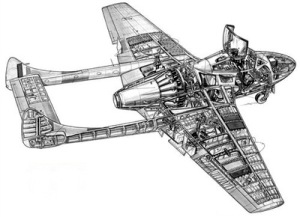
de Havilland

To look at him now is to miss the man he was. Perhaps in the small, wrinkled canyons which line his face, it is possible to see a sliver of the past, a glimpse of the famous de Havilland Aircraft Company – his former employer – but mainly he is as unrecognisable as the large field and forest that Horwich once was.

Barry Walsh, born in June 1942 – six months after Pearl Harbour – loves three things: history; football; and table tennis. His living room is lined with books about the Second World War – fights at sea, land battles and the prodigious personalities that dominated the era.

He reels off, in a slightly stuttered fashion, a quote from Franklin D. Roosevelt following the destruction of USS Kearny by a German U-boat: “…history has recorded who fired the first shot. In the long run, however, all that will matter is who fired the last shot.”

Such feeling, such inspiration, matters to Walsh. Powerful radio broadcasts, before he even travelled the womb, somehow capture what he represents – what he stands for and looks to uphold.

A former committee member at the Hilton Table Tennis Centre and one of six official key holders, Walsh only recently stepped down. Seven years of ‘letting people in’ was enough. The man always seen on Sundays, Tuesdays, Wednesdays and Fridays was reducing his outings to just one thus finally retiring in legitimate fashion.

Recent years on the table tennis circuit have led to this moment – his number of matches declining from 72 (2011/12), to 21 (2012/13) to a mere 6 (2013/14); his last victory a season-ending barnstormer against John Lawrence on 6th April 2012 (11-8, 11-8, 11-6). Lawrence twice bowed to the might of Walsh that season, as did Eric Shaw and Bob Waller.

Those days cease to hold much significance for Walsh though. Despite being one half of the uproarious Summer League outfit, the Coffin Dodgers and noted for wearing a fine collection of bob hats and T-shirts at the club, it is the 1950s and 60s that still have him entranced.

Re-awakening memories of his first few years of employment in the engineering sector and his initial rejection by de Havilland, he recalls: “Listen to this. This is what people can do. My brother Clive knew an upstairs guy – one of the bosses. He got me in. Those eight or nine years made me. It was proper engineering. Horwich was a massive place.”

Given the nickname ‘Chert’ from his footballing days, Walsh understood the importance of working for a grand and reputable British aviation manufacturer – its premises built in Horwich in 1937; “part of a group of ‘shadow’ factories constructed in Lancashire, away from the main bombing zone in the south.”

The Mosquito (1940), the Vampire (1943) and the Comet (1949) still fly through the mind of Walsh. They provide succour and compound his great thoughts of Church Road “bomber command” teacher, Mr Worrell.

Aware of his pupil’s eyesight deficiency and the need to wear glasses, Worrell produced the classic words: “Walsh – you’ll have to play at left back.”

From left back to engineering to table tennis, Walsh’s size 7 ½ feet now stand at the crest of a small mountain having been made an Honorary Lifetime Member of the Hilton Centre. For the inverse buccaneer, it is another beginning.


BLGC Seek Next Generation

Empires fall. Bit by bit they disintegrate – marry their mortar with the dust and dirt on the ground. The Ottomans, the Romans, the Persians, the Mongols – all had their era, their might, a trail of subjects and slaves; hubristic legacies now largely forgotten, yet represented by potent dents in the minds of historians and archeologists.

The Bolton Lads’ Club began life in 1889 as the Children’s Bolton Club. It was the same year that gave birth to the Eiffel Tower, Adolf Hitler and Vincent Van Gogh’s The Starry Night.

Founded by two church leaders and three industrialists, acutely aware of the plight of young, cotton mill children and their need, initially, just to be “able to wash, eat and sleep in peace away from their looms”, it served a distinguished role as a hostel.

Less than a decade later, the stampede began: “They came in their hundreds, for of all animals, lads are perhaps the most gregarious. They came to meet their fellows under conditions somewhat more comfortable and convenient than their natural meeting place, the street. They initially came for amusement and for games and for nothing else, and if we had told them it was our intention to improve them they would certainly not have come.

“But it is interesting how quickly their attitude to the club has changed, it is no longer our club, it is theirs, and we merely manage it for them. It is no longer a mere place of amusement, but is a place which plays a real part in their lives. It is a place for honour and for success.”

In 1947 table tennis entered the Lads’ Club’s doors. Bark Street – the old location – welcomed the fevered game, entered its recruits into the Bolton League. And so, the beautiful sport was inaugurated, two decades after the first World Championships in London and the year the International Table Tennis Federation or ITTF was formed (1926).

This led to a crossover point in 1952 – Japan’s World Champion, Hiroji Satoh signalling the end of the hard bat / pimpled rubber era and the rise of the sponge bat. From wiff-waff, to ping-pong, to table tennis sophisticates, the game developed – reducing the net height from 6 ¾” to 6”, introducing US celluloid balls and embracing technology on an unprecedented scale.

The Lads’ Club evolved by introducing girls into its ranks. In 2002, Team BLGC moved to its new £5million premises on Spa Road – the rear of the building resting impressively on White Lion Brow.

Inside, Tomorrows Citizens roam. Sports and games are played – basketball, pool, Xbox, football, boxing, gym. Underneath the Harrison Burton Climbing Wall, however, is a pitiful sight: two TT tables. (There used to be five permanently unfolded.) Numbers are short. Coach Roger Bertrand (07530 690985) and volunteer Ian Monk (07903 827703) have just three 12-18 year olds for the forthcoming September-April season. They are, in many ways, the Blackpool FC of the table tennis league.

What has gone wrong? How can they resurrect the glory days (2012/13) when their ‘A’ team finished a credible 6th in Division Four?

By its very nature, a youth club loses players. Suddenly, there is nothing to replenish the squad though. The feeder club’s diet is now a mirage.

Bold/passionate, empire-saving youngsters required: Mondays 5-7pm & Thursdays 6-9pm. Bertrand is waiting.