Category Archives: Table Tennis

Movers and Shakers II

Continuing this column in relation to the Blackpool manager’s job, I think the point I was trying to make is that the higher you climb in most disciplines, the harder it gets.

You are often barracked and jolted – left weary, yet with a better understanding of yourself. This is borne out in the following table which displays the average win percentage ratios when a player moves up a table tennis division:

                                                                Ratios*

Division                     2011/12-2012/13    2012/13-2013/14    Average

One > Premier                     4.07                            4.15                     4.11

Two > One                            4.02                            2.53                     3.27

Three > Two                         2.99                            1.83                     2.41

Four > Three                        1.65                            1.81                     1.73

  • Each number based on data from 4-7 players

Player ‘A’ in the 2011/12 season for example might think himself a giant with an 80% win record in Division Four, but the likelihood is that this would be reduced to a mere 48% once in Division Three (80 divided by 1.65).

If the same player were to go even higher, his figure would tumble by a ratio of 2.99 to just 16% and that is before the fierce winds of Division One and the Premier host his talents (if ever) indicating a final figure of just 1%.

It is a relatively straightforward methodology ascertained using limited player data, but it quite uncannily reveals across two sets of statistics (over nearly three seasons) the increasing difficulty of rising the divisions, thus reaching the top.

Jumping from Four to Three and One to the Premier seems particularly consistent, however going from Three to Two or Two to One would appear to have got easier judging from the declining ratios. That is one theory anyway. Another is that the players going up are technically better prepared.

Mike Audsley of Meadow Ben B is a good example of this (ratio 1.17 between 2011-13) and with the 2013/14 season yet to finish, Hilton E’s Wilson Parker currently stands at an impressively low ratio of just 1.05 (96.30% divided by 91.67%).

Such figures obviously pull down the overall average but they also stand as a testament to good coaching, commitment, belief and a solid dream; categories/virtues I know young Parker has in abundance (strong parental support being another key factor I would suggest).

This leans into a conversation I had with Bury cricketer, Matthew Metcalfe the other day concerning success and its key ingredients. He was fortunate to attend a talk in Salford by three-time Super League Grand Final winner, Brian Noble during which Nobby (as he is affectionately known) alluded to the absolute need for a dream or vision.

No matter how much rhetoric you provide to an athlete or player, there has to be an overriding vision that the team can buy into; not a cheap, prescriptive gimmick but rather a firm, achievable target – genuine desire on the part of the collective.

I have scoured the divisions and spoken to numerous people in an effort to understand what exactly it is that undermines or improves a person’s win percentage. Many answers have come back (respectively): a broken bat; demanding shifts at work pre-match; refusing to give up even at 10-6 down; playing in both the Bolton and Bury leagues; more practice; strength, mental agility and experience; incentive of winning the division.

My conclusion? Bluff generally only impresses a bluffer. No interview with Karl Oyston thus far.


Movers and Shakers I

yeboah II

I applied for the Blackpool manager’s job via email on Thursday, 23rd January at 1.59pm. I have worked for enough bounders with no foresight, vision or inventiveness to know that it was time for the little man to have his day.

Eleven minutes later, I received a response from the chairman’s PA, Dawn Butterworth advising me that without the necessary coaching badges such an appointment was “impossible”. I quickly pointed out that badges can be taken after the appointment and she conceded some ground citing the James Beattie case at Accrington Stanley (a fine and qualifications deadline).

Completing FA Level 1 (32 hrs), Levels 2 & 3 (UEFA B Licence – 165 hrs) and then the UEFA A Licence (Championship managers and above) which is run over 21 days would take some doing, but for the sake of a modest 18-month contract on £5000 a week, I was prepared for the hardship.

My communication to Karl Oyston consisted of numerous points: my understanding of the game having watched football since the 1978 World Cup final; a pedigree in terms of success (don’t laugh – golf Junior Knockout winner at Breightmet Golf Club in1986 & back-to-back table tennis promotions in the Bolton League 2011-2013); a head for numbers; knowledge of great footballing debuts.

It was the latter along with my firm belief that a sharp scouting eye is more important than having played professionally that I wished to press home (straight from the Arsene Wenger school of management).

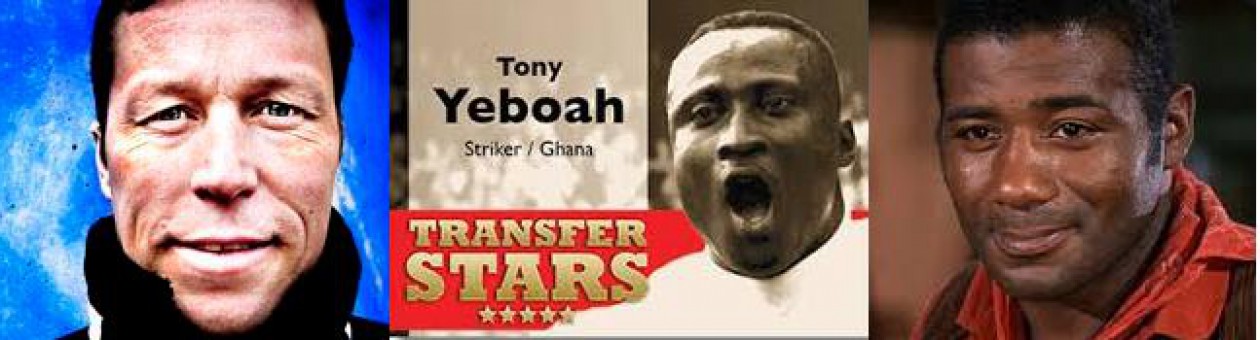
I have had the privilege of witnessing Eric Cantona play in a Leeds United shirt for the first time at BoundaryPark in February 1992. Three years later I was mesmerized by the presence of Tony Yeboah scoring his debut goal at Old Trafford. In 2000, it was the turn of Rio Ferdinand making his home bow in a more sensible 4-4-2 formation (following the disastrous 3-5-2 employed at Filbert Street). A strutting, more confident centre half I had never seen.

All these players – as long-time fans of BWFC will know having seen the sublime skills of Jay-Jay Okocha – had one huge, seismic quality in common: they were able to excite. Their presence and audaciousness was from another world. To quote Jon Howe: “Like Cantona before him, the reverberations from Yeboah’s arrival were so immediate, so openly emotional and so telling.”

Finding such greatness within the ranks of the current Blackpool squad was my aim – players maybe rashly overlooked, footballers just not motivated correctly, men simply played out of position or psychologically strangled by the existing system. Could I put myself alongside the bookies favourites’ Micky Adams, Barry Ferguson and Karl Robinson? Yes – why the hell not. Was I delusional? Only in part.

I kindly included a list of transfer targets given the impending deadline: Tom Eaves; Josh Vela; Craig Dawson; Ivan Klasnic. I would fool Freedman into releasing the first two for a pittance. We would have our rock, Dawson. And Klasnic – the perfect foil for Eaves – would light up a crowd once more.

What has this got to do with table tennis? Did I even get an interview? I will tell you next week.


Grimwood Reaps Warburton Cup Q/F Spot

Warburton Cup (last 16)

Radcliffe   396

Boyzone    425½

It is a tough ask for any team to concede an average of only 2 ½ points per set. But that is what Radcliffe (currently 3rd in the Premier Division) were asked to do tonight. Playing against the relegation-threatened Division Three side, Boyzone (handicap 301.5), they had home advantage however, the services of topspin king, Rob Hall and the knowledge that a well-brewed pint was waiting for them next door.

Boyzone entered this venue looking a tiny bit sheepish, half-wary of what was in store. Horror stories of Premier beatings regularly circulate in the lesser table tennis dens – tales of humiliation, of forced retirement and exposing half-decent players as quivering buffoons.

Manoeuvring your way to this venue is a job in itself. Once past The Unicorn public house you hang a left opposite Next Frydays Fish & Chip Shop and proceed to rumble across a cobbled track before the real assault course of 100 pot holes begins. Making it into the car park you are met by a flood of darkness, a stargazer’s paradise and the seemingly phantom presence of Jim Chadwick.

“Hello.” Jim is a pleasant chap, a perfect ambassador for this great sport. He shows me inside what at first appears to be a large, corrugated container. The dainty, green-check curtains immediately stand out; behind them and the windows, security grills perhaps alarming to a cultivated crowd.

Other items give this place an absurd yet comfortable aura: the World of Ice Cream freezer stood randomly by the door; the white-beamed ceiling; the six fluorescent kitchen lights. And that is before we witness the splendid ‘triple jump’ knee-high socks of visiting player, Vinny Merrit (children’s nursery proprietor by day, entertainer by night).

Hall gets the play underway against Matthew Brown and things immediately look ominous. Hall prefers the two-shot rally, has the ability to reverse most push shots at incredible speed. Such play numbs the opponent – has them wondering how to live with such fire. Brown has no answer yet scrambles sufficient points (3-11,2-11,4-11,2-11).

It is Radcliffe’s Michael Dore now. He has the build of Kenneth Clarke, hair of a chimney sweeper. A more patient player than Hall, he waits for the correct ball height before throwing himself into the shot. Too much respect perhaps, but then Jez Grimwood is a lower league heavyweight, a solid counter-hitter. Dore loses crucial points in the second: 11-2,11-7,11-3,11-2.

Gabriel Wilding has to salvage something now – indulge in the rampant slaughter of Merrit. Therein lies the problem. Merrit is useful. Most table tennis players are useful. His backhand shows great menace and it is another middle set which nicks crucial points: 2-11,3-11,9-11,2-11.

Brown picks up a further 27 points. He has the intense look of a highlander defending his patch. Merrit jokes his way to another 17. But it is kitchen designer, Grimwood (tape-measure in back pocket) who sees Boyzone home (39).

The old mill town and Mesolithic area rumbles. The River Irwell spills some of its load. Boyzone have entered this former coal-laden area and they have conquered!

Quarter Final Draw

Hilton L / Bolton Uni B Vs Standish

Meadow Ben C Vs Farnworth SC A

Little Lever C / Hilton G Vs Boyzone

Bolton Uni A / Harper Brass A Vs Heaton F


Hilton Raid Scuppers Farnworth Promotion

Division Three: Farnworth SC ‘B’ 3 Hilton ‘K’ 6

For a team who were looking good for promotion at Christmas but who were then savagely beaten by title favourites, Hilton ‘I’ 9-0 in the New Year, Farnworth needed a result tonight. They needed a show of mettle, an undaunted display of might – performances from the depths of both squad and body.

Living with the visitors up to match six (3-3) – in large part due to the experience of old hand, John Ainley – Farnworth had this teed up nicely, ready to sound the battle cry and edge to victory.

Cue the unluckiest player in the league, Farnworth’s David End losing his third five-setter of the night, Ainley missing his treble and Hilton’s Brian Young with a born-again performance against John Rothwell.

One of the trickier venues, Farnworth Social Circle Cricket Club has an ‘under the stairs’ feel to it. To enter its table tennis bosom is to be met by paraphernalia not exactly crucial to the great game: stacks of plaster board behind the door; folded-up buffet tables; odd-shaped pieces of wood leaning against the wall; one orange life ring.

Whether this is strategic, part of the intimidatory armour, I do not know. The faces seem welcoming enough, as do the eight coat hangers – rare practical assets in this cubbyhole – yet beyond the minor pleasantries one senses the need for a power shift within this club, a firm separation of lines between cricket and table tennis.

Hilton’s Mathew Fishwick, 85% man and fourth finest player in Division Three this season got this show on the road in his usual uncompromising style. Fishwick is a human wall, a table tennis automaton. He must have played each shot thousands of times now and such dedication tends to sink opponents. Rothwell, deep-serving maestro, was fortunate to take one set: 6-11,9-11,11-8, 7-11.

Jeff Saunders – digger of the ball, a lower-league Jeff Craighill in terms of style – playing his first away match ever, will perhaps stay at home in future with the knowledge that low ceilings are routine annoyances ‘on the road’ and do not suit his game. Ainley, the wily, bespectacled man with a scooped push courtesy of his rotating, Gorilla-like arm proved to be too much: 11-5,4-11,11-7,11-9.

Enter not ‘The Special One’ but ‘The Unlucky One’. David End, Farnworth’s no.4 is half the size and has half the stats of usual incumbent, Carl Bennett. To see him play, however, is to respect his audacious looping style. Regular whispers emanate from him (“Rubbish. Rubbish.”) and you can see the demons plying their trade in his company. He lost this one in horrible fashion to Young: 13-15,11-9,7-11,11-8,12-14.

Rothwell pulled Farnworth back into it by defeating Saunders (3-1). End did his usual five-set trick against Fishwick (2-3). And Ainley sneaked home versus Young (3-2).

Match seven (End versus Saunders – battle of the 1961 boys) was pivotal – the best spectacle of the night; attack versus defence (9-11,8-11,14-12,16-14). End had it (6-4 up in the fifth) but then the groan, the calamitous finish (7-11).

Division 3 ‘Top Six’

                                                P              W            L              F              A             Pts

1              Hilton I                  12           8              4              67           41           67

2              Lostock                 12           8              4              64           44           64

3              Heaton E               12           7              5              61           47           61

4              Hilton H                12           8              4              60           48           60

5              Farnworth SCB   13           6              7              59           58           59

6              Hilton K                13           9              4              59           58           59


The Willy Wonka of Season Tickets

That I can just turn up at one of twenty eight table tennis matches each week seems to me pretty special. I pour over the fixtures hoping for an interesting clash and then days later wheedle my way in – sometimes with trepidation, often in the knowledge I’ll see a familiar face, always conscious that I scribble too much down and risk missing the deeper story.

At times, gearing up to watch Premier and Division One matches is like walking into a private function room or board members’ and football managers’ bar. “Who the hell are you?” I sense them thinking. “Ever played at this level?” “Nobody” and “No” would be my answers. No access to the vintage whisky and wine or Cuban cigars therefore. No easy laughter – just the frozen air surrounding an impostor.

I exaggerate of course. The chocolate factory of table tennis venues is mostly welcoming. I was once offered a cup of coffee by Barry Walsh – Hilton’s sprightly elder statesman. And Richard Whittleworth of Walkden Methodists has hypnotic-like power over the Ladies’ Fellowship group there which shuffle in with the tea and biscuits at 8.30 prompt.

Comparing this prized, free, invisible season ticket with say, a 2013/14 Reebok Stadium pass or regular visits to the dark side (Old Trafford) or even Fleetwood’s Highbury Stadium is credible, however. I cannot promise the cultured movement of Tim Ream, the mega-signings of slothful, rich kids, or the reassuringly charming Captain Pugwash music each time a point is scored. What I can do is guide you through Bolton’s network of still blazing, sporting homes.

Hilton Table Tennis Centre is where the journey must begin. Home to 22 of the league’s 58 sides, it is now entrenched in Horwich’s history – up there with Rivington Pike, Winter Hill, the town’s first-built locomotive (1887) and The Blundell Arms to my mind. An unassuming building, a discreet location in the back streets yards from Aldi, yet inside – the perfect floor, lighting, tables, nets and dividing curtains; a true Mecca with matches played each week night.

Harper Green Leisure Centre is next in size. Exactly nine miles from the table tennis capital, Farnworth’s multi-sport venue is years behind the master, yet shows signs of developing young talent and a true thirst for the game courtesy of 13-year-old ‘D’ team player, Keane Mills and others.

The smaller venues have their quirks and humorous betrothals as you enter. Heaton Cricket Club has something of the operating theatre about it. At the same time, descending those steps to the ‘cellar’ can feel like walking into The Crucible.

Ramsbottom, as I have alluded to before, is quite a sodden place offset slightly by the pleasant drive there.

Here is my overall ‘Top 10’ for match nights:

Venue*                 Capacity      Pros                                     Cons

Hilton TTC                 5             Professional set up      Noise

Harper Green LC    3            Gymnasium space         Lighting/Distractions

Walkden MC             1            Modern and spacious  Lighting (angled)

Ladybridge CC         2            Good length                       Low ceiling

Bolton L&G Club    3             Space                                     Noise/Human traffic

Heaton CC                 1             Separate to spectators   Overall size

St Paul’s Peel PH    1              Peaceful                               Setting up table

Lostock TC                  1             Very private                   Table/Low ceiling

Meadow Hill TC      1             Intensity                            Temperature/Length

Ramsbottom TCC  1              Sufficient seating        Temperature/Length

* Albany TTC, Farnworth SCCC, Flixton CC, Little Lever CC, Radcliffe CC & Wharton URC – yet to be assessed.


George Laks R.I.P.

tt gl

“Most men lead lives of quiet desperation and go to the grave with the song still in them.”

I heard these words for the first time while watching a film with my children over the Christmas period. I suppose they act as an emphatic plea to us all. Henry David Thoreau – author of them and the famous Walden (1854) – lived such a short life himself (dying aged 44) yet, as with many of his quotes, observed things in a rich, philosophical manner.

Numerous great minds were inspired and influenced by Thoreau: Leo Tolstoy; George Bernard Shaw; Mahatma Gandhi; John F. Kennedy; Martin Luther King Jr. He lived the life only he wished to live and for that should be commended.

George Laks, Bolton’s adopted son, followed a similar route it could be said. Of Polish origin, George fled the invading Germans on 1 September 1939 less than a month after his 20th birthday. Biking it with his brother to the Soviet-controlled east, he effectively traded Adolf Hitler for Joseph Stalin. A proud Pole, however, George refused Russian citizenship.

The consequences of this intransigence were harsh. Accused of being a spy in a slightly surreal twist to his already dangerous plight, George found himself sentenced to 12 years hard labour in the gulags (Vladivostok and Magadan among others in Siberia).

Serving 18 months of this before being permitted to join the Polish Army, George then worked in Tashkent and Kirkuk before a London delegation invited him and his compatriots in 1942 to join the Polish Air Force in Britain. Initially stationed in Blackpool, he finally made his way to Bolton via RAF Halton as a burgeoning wireless mechanic.

A stint in Italy (1944-46) and demobilization from the air force in 1948 left George free to finally pursue a normal, civilian life. Jobs with Metropolitan-Vickers, Marconi and Kendal Milne & Co (now House of Fraser) gave him a taste of electrical engineering British-style, but this son of a prominent Polish engineer knew he had to start something of his own.

Breightmet Electrics was born in the 1950s. Two decades later it had six shops and around thirty employees. Slot TV was the thing and George was one of its early pioneers. Outside of his professional sphere though, George developed a philanthropic streak and it is for this generosity that many remember him today.

George’s Wood in Ainsworth (planted with the help of fellow Bolton CHA Rambling Club members) was donated to the Woodland Trust. The swish ‘top table’ (Cornilleau 740) – Hilton Table Tennis Centre’s very first quality table – was a gift from George and is the source of much amusement to this day (Jean Smart misspelling his name on the tiny plaque as George Lax).

I think we can safely say that George’s song touched many. He lived ‘til 94 – a ripe, old age (just one year younger than Nelson Mandela). There are fewer and fewer of his generation about, but such vitality – playing table tennis right up until the end (for Hilton, Breightmet Electrics, Heaton) – is an example to us all.

Colin Roberts: “George had a table tennis room purpose-built at the back of his shop. I met his wife, Joyce following the Keogh/Ritson merger in 1968. I have enormous respect for him.”

Alan Bradshaw: “Johnny Leach [Table Tennis World Champion 1949 & 1951] toured RAF Aerodromes during the war challenging all-comers whilst sat down. He soon got off his chair when George started playing.”

Jean Smart: “George would not let me change the plaque. We had many a laugh.”

Derek Weston: “He would often keep staff on when not needed and would famously pop in even when retired.”

Alan Ingerson: “A very quiet and softly spoken man – a decent defensive player.”

George Laks: 2nd August 1919 – 13th December 2013


Desperate and Without the Gods

Division Two: Ramsbottom ‘D’ 7 Harper Brass ‘A’ 2

I am sat here tonight in one of the less silky venues – Ramsbottom. Great history (Australia’s Michael Clarke played for Ramsbottom Cricket Club in 2002), but the table tennis room within the ground is, for a craftsman, an artist, quite hellish and imposing – in need of lottery funding.

The wooden ram horns mounted on the far wall curse all visitors should they look up at them and the painting (signed ‘R.F.’) above the umpire’s chair seems to be from the Napoleonic era; a hint of war despite the sporting scene.

I hand Josh Sandford his 50p win bonus for turning over Hilton E’s Roy Alty the previous week. He looks slightly perplexed, yet I firmly believe such an arbitrary and jocular system helps to galvanize the squad. No additional £1 as Wilson Parker smashed him, but a financially stable week nonetheless.

Ramsbottom are not what we expect. Tim Fields is working and Dominic Siddall studying hard. Their experienced replacements, David Cain and Neil Booth appear iron-like and insouciant next to the chipper face of no.1, Martin Ormsby.

It is Ormsby versus Harper Brass’s Allan Auxilly first. Auxilly is like a surgeon, a mechanic – each move thought through; a refined and unruffled match player with a cool head. His backhand topspins arrive from nowhere and are too much for Ormsby (11-6, 11-5, 11-6).

Raymond Isherwood is next – ‘playing up’ from Division Four against the man with anti-spin rubbers, Cain. Cain’s eyes have a luminous quality to them – an optimism that has hung around despite his ageing years. He wears an Oldham Athletic top, has white socks and tanned ‘holiday’ legs.

Isherwood is a 97% man but such lower league stats mean nothing here. It is like a little boy asking out Marilyn Monroe. Cain ravages and torments him: 11-7, 11-3, 11-4.

2011 Warburton Cup winner, Sandford steps forward. I have every faith in the 20-year-old, Bolton-born looper. His opponent is Ormsby; granite-chinned ‘ringer’, Booth unfortunately delayed. 11-9. Sandford’s forehand topspin is working. A 5-2 lead in the 2nd suggests an imminent win – the Harper player, when not attacking, having the meticulous push/vision of a man staring through a submarine periscope.

6-5. But, oh no – what is this? Sandford’s bat has broken mid-shot having got trapped in the rear curtain – the blade flying over Auxilly in the umpire seat. He borrows a bat, but his soft rubbers are now a distant memory and it is a cruel slide to defeat: 9-11,13-11,5-11,9-11.

Auxilly loses to Booth (9-11,8-11,10-12), yet turns over Cain (11-6,11-9,11-9). The rest of the evening, however, is a horrible blur, a turkey shoot, a mauling.

I stand in a large puddle returning to the car. It has not been a good night. Bah! Humbug!

Division Two Table                               P          W        L          F          A         Pts

  1. Hilton E                                              11        7          4          67        32        67
  2. Little Lever Cricket Club C            11        11        0          65        34        65
  3. Hilton F                                              10        9          1          64        26        64
  4. RamsbottomTown TTC D              11        6          5          59        40        59
  5. Meadow Ben B                                 11        7          4          56        43        56
  6. Meadow Ben A                                 11        5          6          51        48        51
  7. Farnworth Social Circle A              11        4          7          41        58        41
  8. Hilton G                                             11        3          8          40        59        40
  9. Ladybridge B                                   11        3          8          35        64        35
  10. Bolton University B                         11        3          8          32        67        32
  11. Harper Brass A                                11        2          9          30        69        30

Half Way There

Going into Christmas, we have a good idea of who the likely promotion and relegation teams will be. Division Three, however, lays bare such pontificating.

Last season was a five-horse race right up to the tense, final evening. This season’s two promotion berths are, somewhat incredibly, still open to nine of the eleven teams – a mere six points separating them.

The crucial question in weighing up the prospective candidates is: Do we have a team strongly anchored by one individual or are there solid performers across the board?

I don’t believe it is possible to get out of a division with just one star player and for that reason I am writing off Hilton ‘J’ / John Barker and Lostock / John Nuttall. Apologies!

My money has to go on Hilton ‘I’ (Brian Hall, Graham Wilson, Rovimil Dato) provided Dato continues to play and Farnworth Social Club ‘B’ (Carl Bennett, John Rothwell, John Ainley) on the condition that Rothwell plays to the level I know he is capable of.

Dark horse, Heaton ‘D’ (David Bevitt, Greeny Greenhalgh, Melvyn Brooks, John Hilton) can get in amongst it only if Brooks stays off the Raki and avoids jetlag.

Boyzone (Jeremy Grimwood, Matthew Brown) remain one player short of consolidating their place in Division Three and so will have to endure another miserable season in Four, and Irlam Steel (David Yates, Matt Hood, Neville Singh) look to have finally bowed to relegation following a mediocre season from Yates, their usual saviour.

The Premier Division is dominated once more by Flixton and Ramsbottom ‘A’. One gets the impression that the form of Ram’s no.3, Andrew Jackson will be pivotal in trying to win back this hallowed title from bitter rivals, Flixton.

The likely fallers in the top flight are Ramsbottom ‘C’, unless Thomas Ryan can inspire his teammates and Burning Desire with their deep and ragged squad.

Division One is a slightly clouded picture in the scrap for 2nd place after the undefeated Coburg (Derek Watmough, Robert Bent, James Hewitt). Hilton ‘B’, ‘C’ and ‘D’ along with Heaton ‘A’ continue to show desire in an effort to play with the Premier giants in 2014/15. Heaton’s Ward brothers – Matthew (working abroad), Paul (broken toe) – should clear the way for Hilton ’B’ or ‘D’.

Division Two – Hilton ‘E’ and ‘F’ are both vying with Little Lever ‘C’ for the top spots. At the other end, it is a dogfight between Bolton University ‘B’, Harper Brass ‘A’ and Ladybridge ‘B’ (John Birchall’s return timely).

Division Four – Harper Brass ‘B’ all the way.


Very Superstitious

Superstition is defined as “Belief in supernatural causality: one event leading to the cause of another without any natural process linking the two. It contradicts natural science.” Opposition to it (omens, astrology, religion, witchcraft) was particularly strengthened during the Age of Enlightenment in the 18th century.

And yet, three hundred years later, it is everywhere: in every game; on every bit of grass; on every track; in every sports hall. We all have at least one little habit, one conscious finger-crossing, ‘touch wood’, salt over the shoulder moment which, it is believed, will improve our performance or defend against bad luck.

In US stock car racing, shelled peanuts are almost NEVER sold at an event. “According to 1930s racing lore, peanut shells were always found in the smoldering remnants of a badly wrecked car.” Beware the driver that eats nuts before a race!

Likewise, in Major League baseball, you “DO NOT talk about pitching a no-hitter!” In other words, you’re pitching against the final man with the potential to reduce the opposition team to zero hits across nine innings. Any mention of what COULD happen is anathema, a curse, a total “no-no”. It is like leading 8-0 in table tennis, with the final match player warming up with a huge, mocking and complacent grin on his face.

Cricket has its own superstitions especially when you’re part of the batting side. Always put the left pad on first like Tendulkar. When there is a great partnership at the wicket, DO NOT move seats. In fact, DO NOT get up!

Nick Faldo – winner of six major golfing championships – only cut his fingernails on a Monday, “so as not to affect the balance of his putting grip”. And he certainly DID NOT have lunch with fellow leaders on a Sunday which is common these days.

Table tennis has its peculiarities at local level almost as if Dr Kananga (Live and Let Die) were sat on your front bumper on the way to the match.

Graham Clayborough pats his thigh twice before receiving a serve. He refers to it as a “confidence trigger”.  Tim Fields wears his lucky Santa socks no matter what the season. Roger Bertrand cannot play without eating three bananas during match night. If John Barker sees the slightest gap in the court curtains, he HAS TO fasten them. Personally, I HAVE TO flip the ball into my left hand before serving.

Good luck this Friday. Voltaire will be watching.

Hail King Louis

king

Premier Division: Hilton A 1 Flixton 8

They stroke the tables at this level – make sure there are no damp spots or rogue bits of dust. I am sat next to the 1980 European Champion, John Hilton now representing Flixton. He is knowledgeable – the Lovejoy of table tennis, his voice a little gruff.

The table is a grand piano to him – its surface, spruce rather than Masonite. This ‘twiddler’ of the bat and table tennis giant is in good spirits tonight. A range of subjects smatter the air – tax, Chinese players, old foe Ramsbottom’s venue.

We begin. I remind Hilton’s Mark Gibson that he’ll be facing three undefeated players in Flixton’s Paul Cicchelli, Louis Rosenthal and John Hilton. “No pressure then,” comes the gallant retort.

The first match goes with form: Cicchelli too refined, too canny when pitted against the raw power of Gibson (11-7, 11-7, 12-10). Cicchelli arches his body like a yoga teacher – his wolfman arms twisting and bending, his Killerspin paddle case an early-warning system, a ‘DEFCON 3’ to the opposition.

Jordan Brookes is next – Hilton’s laid back, yet sinewy 15-year-old. Headphones on, music between matches, you sense that he’s drifted off at times – is walking a beach in his Hollister joggers. 17-15: a tough, impressive start by Brookes – two set points down versus the hair-lacquered Action Man, Rosenthal but living with his speed.

Rosenthal, 29, Puma top, Butterfly trainers is the perfect embodiment of counterdrives. You think a ball has got past him, but no – the super-fit Flixton man swings an arm from nowhere and mops up the points. 11-6. 11-7. 11-2. The comeback is not unexpected, but still, it resounds with SAS-like flair.

Gibson again. Graham Coupe, Hilton’s third man has yet to arrive and so it’s up to the Hilton bomber to try to dismantle the game of Flixton spinner, John. Only one black rubber for JH tonight – his preferred two long since outlawed.

11-6: Gibson on top. “I’d say you’re playing him too much down his backhand,” Cicchelli tells JH. An immediate response from the 1980 Champ: 11-7, 11-7, 8-11, 11-9; faded Athens 2004 T-shirt soaking up the sweat, shot variation colossal.

Brookes stops the rot in a topsy-turvy spectacular with Cicchelli (11-1, 11-8, 6-11, 2-11, 11-6), but after that the dominos fall: Coupe 0-3 Rosenthal; Brookes 0-3 Hilton; Coupe 1-3 Cicchelli; Gibson 0-3 Rosenthal; Coupe 2-3 Hilton.

The Rosenthal aftershave just about lingers through the grind and perspiration.