Two Recent Football Articles: McDonald & Ball

Image result for david ball fleetwood

Pieces on Neil McDonald (Blackpool) and David Ball (Fleetwood) for the discerning reader…

Neil McDonald:

http://www.itsroundanditswhite.co.uk/2015/06/17/neil-mcdonald-humble-man/

David Ball:

http://footballleagueworld.co.uk/feature-when-fleetwood-let-their-cantona-go/

Feedback welcome.

Jeff Weston

http://www.thesportswriter1.com

Twitter: @jeffweston1970


When Losing Becomes A Habit

losing


On possibly two of their twenty-two evenings there was hope: the opening Division Two fixture on 4th September 2014 when captain, Dave Jones Jnr wrestled the night’s first match away from Krishna Hooton (12-10, 11-9, 10-12, 11-3) and then again on 12th December 2014 when they salvaged a hat-trick of wins against a weakened Hilton H.

But in between and after the beatings came; hard and heavy – six evenings in October/November with a meagre return of 2/54 points and a horrible February/March racking up that same sombre total.

Heaton ‘D’ (formerly ‘E’), a mere six months before, were considered giants in Division Three – runaway promotion kings with 110 points and the experienced hands of Dave Jones Snr, Philip Beales and the aforementioned Jones Jnr.  Journalistic notes on them from their heyday read (respectively): footwork of a ballerina; rangy and lethal; affable but deadly.

This ageing crew, however, has fallen foul of the cursed middle division. Plenty have trod this path and failed – immediately understood the dedication or innate ability required in order to flourish. You cannot, it seems, just stride into the table tennis halls at this level and cement a result or sneak numerous points on your serve. Division Two has that ominous combination of “long established players and young guns being coached”, Beales mourns. In other words, there are no safe matches.

Finishing with a season low of 19 points (Jones Jnr 9, Jones Snr 4, Beales 2 and part-timer, Martin Hulton 4), Heaton have well and truly gone from punching the air in March 2014 to “desperately looking for inspiration from each other” in 2014/15. “By the end we had little belief in our own ability and looked forward to the end of the season and a chance to regroup”, Jones Jnr opines.

The really disappointing aspect was that they’d “somehow underperformed” though – “too many easy points given away…poor reading of serves…too hesitant to attack”.

After a wonderful beginning (75% after his first four matches), Jones Snr won only once more (1/47) – a Christmas present from Jean Smart who was ‘playing up’ anyway. Such habitual play can torment a man. Noises begin to mess with one’s psyche. ‘Will I ever be the same again?’ is the voice – ‘Even on my return to Division Three.’

Heaton will be grateful for their experience once September arrives. They are too good to implode. Until then, there will be a ghost over each shoulder, a slight nervousness with the bat and renewed belief slowly baking in the background.


Interview with Lancashire Closed Championships 2015 ‘Senior Singles’ winner, Paul Cicchelli

17694603964_5fff2b5e7c_c

On Sunday, 31st May – shortly after 3pm – a red-faced, battle-worn and drenched Paul Cicchelli finally got to sit down knowing that he’d just taken the weekend’s big trophy by turning over Formby’s Jack Dempsey in the ‘Senior Singles’ final (11-13, 11-7, 11-3, 11-6).

Below is the full, unedited transcript of an interview in the immediate aftermath of that victory with Flixton and Crosby High’s chopper extraordinaire…

1) The Lancashire Closed Championships. How do they compare with other championships you’ve played in? A good calibre of player today?

From a county perspective Jim Bolton and Dave Wheeldon did a fantastic job running this event. Remember that this event was only put into people’s diaries in late March and the demand to play was so great they even had a reserve list of players queuing to play in the competition. Graham Coupe always makes everybody feel welcome at his club and even posted pictures of all the players on his Facebook page. I hope that they keep running this tournament for many years to come. My little boy Franco has just turned 1 and he has tremendous hand-eye co-ordination, already able to catch a ball, so who knows maybe he can follow in his dad’s footsteps one year.

2) What I find interesting is the commitment players put in behind the scenes i.e. trying to play whilst still earning money. Of the semi-finalists today (Charles Musa, Thomas Haddley, Jack Dempsey and yourself) apparently Musa does shift work, Haddley is an electrician and Dempsey goes to college (4 or 5 hours practice a day they say). How does this impact a player’s performance do you think?

It’s a valid question. I definitely look at table tennis as a hobby and my release from a stressful targets-lead job so it doesn’t mean as much to me if I lose a game anymore. I work for a telecoms company as an Account Manager looking after 78% of all the NHS Trusts with really clever systems built around speech recognition and contact centre management. I travel about 30,000 miles a year, so really fit in a game of table tennis whenever I can. In the Liverpool League I play for Crosby High School and they tend to give me notice about all the best games that they want me to play in. Dave Graham (Crosby High Head Coach and Team Manager) does a really difficult job in managing multiple players across multiple teams and many of them travel just as much as I do to play a game of table tennis.  I’d much rather travel and play the best players after my meetings than just turn up against the weaker teams to massage my ego and win percentage rate.

3) I have mentioned you previously in articles: “too refined, too canny, arches his body like a yoga teacher, wolfman arms, bejesuses pass his lips, too big in the chops, like observing a craftsman in his shed, the most elegant chop in the game (like rocking a baby), Jekyll and Hide game”. Do you think much has changed in the interim?

Ha-ha, that’s great. At 39 years of age and a body now ‘matured’ on motorway service station meals, I think I am the least likely yoga teacher. Do you know what, I probably cover about 6 miles running, in short sprints when I play a table tennis competition and all I can say is that if there is a ball, whether or not it is a ping pong, tennis or even football I can chase it down all day, but ask me to run 6 miles without a ball to chase and I’m more likely to stop off for a chat on the way; anything except exercise for exercise’s sake.

4) Did you think you had a chance of winning when you woke up this morning?

Do you know what – my draw couldn’t have been harder. My first game after the groups was Martin Ireland who just doesn’t miss against chop and reads spin brilliantly. I lost the first game and could have gone down 2-0 if I hadn’t started attacking every loose shot and forcing Martin to play slightly tentative then I would have definitely lost that match. 3rd round was against Rob Hall, one of the most improved players in Lancashire. He’s physically very fit with an excellent technique and although I won 3-1 (I think) every rally lasted at least 12 shots each, which doesn’t sound a lot, but if you saw how hard he hit the ball and the angles he was finding I certainly put some effort in to win that match. The semi-final was against the best player in the room, no question, Thomas Haddley. We’ve played each other loads over the last year and every match goes to the deciding game. Thomas played semi-pro in Greece a few years back and when he hits the ball, you can literally feel the quality coming from him.  Strangely enough even though Jack Dempsey (who I played in the final) was the highest ranked player there, I sort of look on him as a bit of a protégé. He’s started defending away from the table like me and always asks me for little tips and tricks. I am the Mr Miyagi to his Daniel-son (Karate Kid film reference) so I wasn’t nervous about playing Jack, although he has the chance to be the best defender in the country if he gets his head down over the next few years.

5) Which of the listed 40 or so players did you fear the most today?

Thomas Haddley for the reasons mentioned before. Steve Scowcroft because he has just come back playing over the last 6 months after a 25 year break. When he last played a tournament he was number 8 in the country, and when you consider that this was the glory era of English Table Tennis with Des Douglas (ex-World number 6), Carl Prean (World Quarter Finalist) and Alan Cooke (recent World Veterans Champion), John Hilton (European Champion), Steve played a different level to everybody else in the room. And he’s such a down-to-earth fella, never giving it the ‘Big I am’, which is unusual in table tennis quarters.

6) You’re currently 171st in the Table Tennis England ‘Senior Men’ rankings (Dempsey 157th, Haddley 232nd and Musa 486th). What is the highest English ranking you’ve ever had?

English Mens: 49. Juniors – I could beat the number 2 in the country and lose to the number 222 in the same tournament. I was a bit of a show-off back in the day and wanted to entertain more than put my head down and win without looking pretty. But I had some notable triumphs taking out Belgium’s top Junior at the English Junior Open and being one of the last English players left in the competition. The English Open was the last tournament I played as a junior and even though I had all these wins, they never produced another ranking list for that year.

7) Do you see progression for a table tennis player as league, county, British league and international or something different?

Not quite sure what the question implies here, but table tennis is a minority sport. Even telling my work colleagues excitedly on my weekly catch-up conference call today that I won the Lancashire County Table Tennis Championships, got the immediate question back from my boss, “Hmm but how many people actually play table tennis in Lancashire?” It’s almost like anybody that plays table tennis feels that they must apologise for playing. The sport does have a geeky persona attached to it. You will get some players that will never want to enter a national competition and are happy to play in their local leagues, and others that are the best in their local leagues won’t want to play in other leagues, happier to be the biggest fish in their independent pond. The competition that Jim Bolton runs called the ‘Champion of Champions’ pits every Lancashire league singles competition winner against each other and has a large viewing audience and games are even taped and pushed on to YouTube. This is an excellent idea and I’d love to play in that competition, but Liverpool will never let me enter their end of year competition as with my job I can’t get enough league games in to qualify. Keep up the good work Jim, what about an invite-only competition to selected players from leagues – that could be a winning format.

8) What tips can you offer a junior?

Shadow play – learn your shots in front of a mirror. The Chinese do this and have the best technique around and aren’t even allowed to play on a table until they have the right technique to play, which is probably taking the whole shadow-play thing too far.  I used to walk around the house making table tennis ball noises imagining different scenarios to play against. This might have more to do with me being an only-child and entertaining myself than anything else . I would also tell juniors to practise their serves for at least an hour a week. If you can win cheap points with serves you don’t necessarily need to be on top-form that day, but if your whole game is built around finesse and fitness then a bad night’s sleep, cramped conditions or an unfamiliar table could be your downfall.

9) I noticed that Jack Dempsey’s face fell a little when he realised you’d made the final against him after knocking out Haddley in five sets. Why do you think that was?

You’d probably need to ask Jack that. I play in the same team as Jack and he played Thomas earlier in the year and actually won surprisingly comfortably so maybe he felt he could repeat that? Table tennis is a game of intricate styles and nuances and the way in which different people can play the same shot, with even the same technique can produce completely different spins. I think Jack would prefer to play an attacker than a defender. And in fairness, there’s only a handful of decent defenders in the country and he’s one of them, so running into another at a tournament is actually a pretty unique experience

10) To me the whole face of table tennis needs a boost, a lift, a proper grandstand audience, music and crowd attentiveness – a regional Barry Hearn if you like. How would it feel to top Prem’ players like yourself to have a crowd of 500, not just 100?

As Kevin Keegan would say, “I’d love that!” One of my first jobs after leaving school was doing table tennis exhibitions at the Butlins holiday camps. The exhibition would normally be at the end of the holiday and all the guests would be there to collect their awards and have a drink before leaving the holiday camp. I remember I was at Butlins in Bognor Regis doing the exhibition at the end of their 70s music week. There were hundreds of rowdy guests dressed up like the village people, ABBA, Queen etc and the noise was deafening. I even signed bats after the event and felt like a temporary superstar. I sat in the crowd and let my opponent smash balls at me whilst I pretended to read the newspaper and swerve the ball back on to the table with sidespin from 20 or 30 feet away. Ah good timezzz.

Jim Bolton, and his ‘Superstar’ tournament format, has a chance. We don’t need to play with bats made of sandpaper or change the rules. Just get some players in that will be entertaining, supply a nice room and some alcohol for the spectators and you’re on to a winning formula.

11) When you unavoidably jumped over the table tennis barrier after taking the 3rd set against Haddley and then immediately got cramp in your calf, did it cross your mind that you wouldn’t be able to continue?

Er…yes. My whole hamstring went and I couldn’t bend my leg without feeling like somebody had a knife in my leg. Luckily for me there was a competitor who had just passed her physio exams and she worked miracles. It was pretty embarrassing to hit a winning shot, jump over a barrier and then crumple into a heap on the floor though. My wife says I embarrass her wherever I go, and I can now sort of see why.

12) What had you won before winning the Lancs Closed Champs?

I won a few 2 star competitions as a Junior as well as county competitions in Sussex (where I am from), Cambridge, Suffolk and Kent. I played in a great competition called the British Boys Club Table Tennis Championships and won that 3 or 4 times too. But my trophy I’m most proud of is “Search for a Star” where I had to complete a series of sporting challenges, footballs through tyres, tennis, archery, table tennis, badminton and running. I won everything except the running and archery and I was a couple of years younger than most of my counterparts too. I loved showing off with a crowd in front of me. I got a swish gold trophy and a free holiday for my mum, so she was pleased too.

13) Do you think a full season with Flixton is on the cards again after Ramsbottom wiped the floor with them by 40pts (2014/15)?

Yep, we’re back stronger and tougher. John Hilton is recovering from cancer and will (I’m sure of it) be back this year. We’ve also got Steve Scowcroft and Louis Rosenthal and myself back playing this upcoming season. Any team that has Mick Moir in it is going to be very strong, but Ramsbottom, we’re coming after you next season.

14) Do you think yourself, Steve Scowcroft and Louis Rosenthal would be a formidable team guaranteed the Bolton title?

Yep, but Phil Bowen is also one of the most talented players around, and possibly the youngest looking 60-year-old since Benjamin Button, so don’t count him or Phil Biggs out of taking the big scalps too.

15) How does it feel entering tournaments like this? Is there a thirst, a need to still prove yourself?

Honestly, it was trepidation. I’ve played for the County Seniors since I moved up here some 10+ years ago. I’m definitely putting myself out there to be shot at, and at 39 years of age I’d love to play for the Seniors for a good few years to come. I’m not ready to put myself ‘Out to grass’ in the Veterans yet…

16) What was your most tense moment today?

9-9 in the 5th and deciding game against Thomas Haddley. It was a long point and I chopped one off the floor and Thomas mishit it and it hit the edge of the table. Yep that was pretty tense.

17) What is the difference between the Open Singles and Grade ‘A’ Singles Banded?

Open Singles, everybody can play. Banded Singles is open to everybody except the top seeded players to play in.

18) Did you hit top form today? Good points and bad about your game?

Good points were mental toughness, getting myself back from seemingly difficult positions to win, which I guess is my strength. Weak points are that my backhand attack has now got my tennis technique and that doesn’t lend itself very well to table tennis. Imagine Stan Wawrinka trying to recover in under a second to a return of one of his long backhand drives – it’s not possible. I love tennis and will now play with my mate Roger throughout the summer so maybe that one backhand drive shot that I hardly ever use at table tennis should stay in the locker, for table tennis at least.

19) Do you think TT is in good health nationally and do you see us ever competing with the Chinese again?

The Grand Prix circuit is really good for players that want to rise on the ranking lists, but the cost to enter is astronomical, over £60 just in entry forms and that’s before you take into account travel and possible hotel bills. And the winner may get a couple of hundred pounds or a plastic and glass trophy if they are lucky. (What Steve Scowcroft’s daughter calls a ‘Skimmer’ like a stone you throw into the sea on holiday.) The game needs better marketing, better ideas and decent prize money. The Chinese are the best in the world, but why not stop worrying about the Chinese and concentrate on English Table Tennis being the best spectacle and the best format in Europe? Premiership football proves that if you create a great competition then the world will follow, even if other countries actually have better players than us.

20) Anything else you want to chip in of interest Paul, please do…

Thanks. You’ve done an excellent job in your table tennis journalism in the past and we need more people like yourself pushing the sport and uncovering the stories. Remember table tennis is the most played individual sport in the world. We just need somebody to open it up and give a fresh outlook. If darts can pull in thousands of people spectating then there’s no reason why table tennis can’t. And I think you can see from your chat with other players, there are definitely more characters in table tennis than there are in darts. I couldn’t see Phil Taylor diving over a barrier for a winning game shot and pulling his hamstring, could you?


Full results list for Lancashire Closed Championships 2015 from Quarter Final stage:

Senior Singles

Quarter Finals:

J Dempsey beat S Scowcroft

9-11, 11-2, 11-2, 13-11

C Musa beat D Griffith

11-7, 11-3, 5-11, 6-11, 11-7

T Haddley beat S Green

11-4, 11-6, 7-11, 11-5

P Cicchelli beat R Hall

11-8, 9-11, 11-5, 11-6

Semi Finals:

J Dempsey beat C Musa

6-11, 11-7, 11-5, 11-6

P Cicchelli beat T Haddley

8-11, 11-6, 11-8, 5-11, 13-11

Final:

P Cicchelli beat J Dempsey

11-13, 11-7, 11-3, 11-6


Junior Closed

Quarter Finals:

A Hussain beat A Dillon

11-9, 11-9, 13-11

M Lennon beat J Parker

11-7, 6-11, 11-3, 11-5

D Olsberg beat J Gilbert

9-11, 11-7, 12-10, 12-10

Z Cantor beat M Laird

11-4, 8-11, 6-11, 11-3, 11-3

Semi Finals:

A Hussain beat M Lennon

11-8, 11-7, 11-13, 12-10

D Olsberg beat Z Cantor

11-13, 13-11, 11-7, 10-12, 11-8

Final:

A Hussain beat D Olsberg

11-7, 11-9, 11-7


Junior Banded

Quarter Finals:

R Davies beat J Parker

12-10, 11-8, 11-9

D Olsberg beat J Edmunds

11-7, 11-3, 11-3

O Bendall beat J Gilbert

11-9, 11-6, 7-11, 10-12, 11-6

M Lennon beat C Richardson

11-5, 11-9, 11-6

Semi Finals:

D Olsberg beat R Davies

11-8, 12-10, 12-10

M Lennon beat O Bendall

7-11, 11-5, 18-16, 11-5

Final:

D Olsberg beat M Lennon

7-11, 11-8, 11-9, 11-5


Open Doubles

Quarter Finals:

Dempsey&Green beat Olsberg&Cantor

11-8, 11-9, 9-11, 11-4

Musa&Hussain beat Duff&Ahmed

12-10, 12-10, 11-7

Haddley&Scowcroft beat Hall&Renton

13-11, 9-11, 8-11, 12-10, 11-8

Griffiths&Cicchelli beat Pierce&Laird

11-4, 9-11, 11-9, 11-7

Semi Finals:

Dempsey&Green beat Musa&Hussain

7-11, 11-8, 13-11, 11-7

Haddley&Scowcroft beat Griffiths&Cicchelli

12-10, 7-11, 11-7, 11-4

Final:

Dempsey&Green beat Haddley&Scowcroft

11-6, 11-5, 11-6


Vets over 40

Quarter Finals:

T Haddley beat C Knowles

11-9, 11-8, 11-1

C Musa beat M Ireland

11-5, 9-11, 11-7, 11-5

S Scowcroft beat S Green

11-8, 9-11, 11-7, 11-5

D Griffith beat G Lennon

11-8, 11-2, 9-11, 13-15, 13-11

Semi Finals:

T Haddley beat C Musa

11-8, 11-9, 11-3

S Scowcroft beat D Griffith

11-5, 7-11, 11-8, 9-11, 11-8

Final:

T Haddley beat S Scowcroft

11-4, 6-11, 11-8, 11-5


Vets over 50

Semi Finals:

D Griffith beat N Mooney

11-7, 6-11, 11-13, 12-10, 11-8

S Green beat R Bennett

11-4, 11-6, 11-6

Final:

D Griffith beat S Green

8-11, 12-10, 11-5, 11-6


Senior Singles Banded

Quarter Finals:

R Hall beat W Ranton

7-11, 11-7, 11-9, 11-8

N Mooney beat R Assier

11-6, 11-6, 11-8

A Tyson beat M Esro

11-7, 11-6, 10-12, 11-8

M Benjamin beat N Ahmed

11-5, 11-13, 6-11, 11-9, 11-8

Semi Finals:

N Mooney beat R Hall

11-5, 11-8, 11-8

M Benjamin beat A Tyson

11-3, 11-5, 11-3

Final:

N Mooney beat M Benjamin

14-12, 11-5, 11-9


Ladies Round Robin                       

Beth Farnworth won the group


Junior Girls Round Robin              

Beth Farnworth won the group
 

Faizan Bhura: The Diminutive Warrior

faizan


The names of the Nobel Prize nominees are not revealed until 50 years after the event. This adds a certain fascination to the awards given out. Who did the eventual winner beat? Was he or she up against the cream?

Away from the bookies’ chalk and inside the Swedish Academy papers are passed around and eyebrows arched enquiringly. The initial list is cumbersome – it includes around 200 potential laureates selected by professors, society presidents, previous winners and academy members. This is whittled down to a ‘long list’ of 15-20 preliminary candidates in April and then a ‘short list’ of 5 final candidates in May.

Much rigour and due process takes place and that is before the three months of reading and assessment which occurs in order to prepare reports and discuss the merits of each candidate.

It would be nice to think that similar levels of deliberation and brooding happened prior to and on Friday, 27th March at the pre-Finals committee meeting. Present were officers Alan Bradshaw, John and Margaret Scowcroft, George Berry, Jean Smart and head honchos Roy Caswell and Brett Haslam.

On these shoulders rested the fates of the season’s big-name players – most challengingly who was to be engraved on The Albert Howcroft Trophy for Most Improved Player. Not an easy thing to decide. An algorithm can only churn out an unloved number. It does not factor in personal circumstances, the general feeling amongst your peers and the inevitable politics that prevail.

‘It’s a bit like politics and statistics. Which way do you jump?’ General Secretary Caswell admitted with redoubtable insight into the workings of the loyal few that give up their Fridays. Which way indeed when the list is so strong, so full of games revamped?

Six candidates shone across the five Bolton divisions: Robert Shaw (Div4, from 8 to 42%); Keane Mills (74 to 100%); Nathan Rhodes (29 to 70%); Christopher Boys (Div4, 80% to Div3, 51%); Faizan Bhura (Div4, 72% to Div3, 58%); Ray Isherwood (Div2, 27 to 68%). It was Bhura, however, who impressed the old guard. ‘In the end we all just looked at each other and went for Faizan.’

Science perhaps left at the door, but then in the 4’ 11” Bhura they have made a genuine discovery. ‘I always do rubbish in the [pre-match warm-ups]. I make them think my technique is not good at all and then when the match is ready I pull my socks up and turn my brain into gear. That’s what I do.’

‘A proper kidder,’ to quote Scott Brown. Too dry to read at times, but there with his secret weapon – his consistent forehand.

You can get a thousand sentences from Bhura on the game and how he has tracked its idiosyncrasies from the age of 12 – charming, colloquial passages that reach out and shatter any sense of smoothness. All that matters though is his devotion to table tennis, his 1994 Bolton-born (Indian mother/Zambian father) bones that have lifted this trophy once held by Andrea Holt.


‘Mild’ Max Brooks

harry pilling granddad of max brooks


Max Brooks knows very little about Rocky Balboa yet skips five times a week – outside, near the back gate. Such rhythmic poise augments his low centre of gravity and remarkable balance. He claims to stand 5’ 6” tall although one suspects that underneath the slicked-back, mountainous hair he is actually 5’ 5.

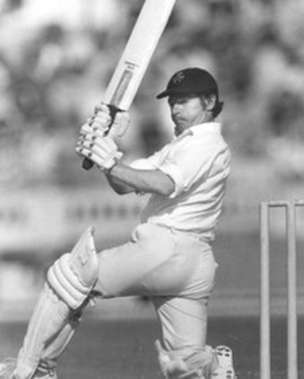
The grandson of treasured Lancashire cricketer Harry Pilling (himself a dynamic 5’ 3” [pictured]) and professional ice skater Yvonne Rayner, Max has a blood line that almost forcibly places a sporting implement in his hand. After first picking up a table tennis bat at the age of ten, however, he soon lost interest.

Smooth trajectories rarely chart a player’s career. Most of the time it is a rugged path forward – a Snakes and Ladders board – full of pitfalls, hard dice and the odd bit of luck. Max’s serendipity came in the form of Sport England visiting his Tottington school two years later, informing him that he “had some talent for the game”. This neutral observation acted as a stimulus, a catalyst to where he is now.

Awarded the Ralph Palmer Memorial Trophy in early April as Bolton’s ‘Most Promising Junior of the Season’, Master Brooks – still just 15-years-old – took 44 scalps out of 45 in Division Three; his one blemish losing to the Austrian, Bernd Dumpelnik two weeks before Christmas when gifts are traditionally wrapped up in readiness for handing out.

Such an ascent into the annals of Bolton’s history (and indeed Bury’s if you consider his 49/57 win record with Seedfield in its equivalent division) has largely come about not as a result of any fortunate DNA, but rather through the guidance of surviving paternal grandfather, Mel Brooks (now 73). ‘Grampa Mel started me off at Heaton CC. Both grampas have been role models in helping me achieve my goals.’

Max’s approach to the game is surprisingly serene. There is none of the ‘mad’ or mercurial synonymous with such a christening. ‘Mental toughness and never, never give up – play for every point,’ he casually elucidates. Intensity doesn’t ride with the words but instead an internal grit and indomitable belief. It is the same when discussing education (refusing to fuss and be drawn on his favourite maths discipline): ‘All maths I enjoy. It will be what I need when I start work.’

The pragmatic side of him is startling in part – perhaps too clean or manufactured. But then, as Grampa Mel – chief mentor and disciple of Cliff Booth – tells me, returning to the main subject: ‘We spend time discussing strategy and the mental side of the game. He is like a sponge for taking in information, though being his own man he sometimes tries other things.’

Holding the Ralph Palmer trophy is like a ten-year pass to beautiful things – a soft guarantee of climbing the divisions. Big names have gone before Max including England’s Andrew Rushton (1996/97) – had their names inscribed on the silver plate.

A ‘B-game’ is what is required now. ‘He needs to dig short and develop an aggressive backhand block and kill,’ coach Brooks asserts. As for the skipping (3×40) – that will continue.


Keane Mills: The 100% Kid

dour scot

He has the hard jaw of youth – an almost inert face that gives very little away. After speaking to him, you do not get the sense that he has won anything, but rather lost. There is a bit of the dour Scot in him – a solemn, behind-the-eyes weighing up of events. And yet he is a Boltonian, a successful English lad who has walked through his home town’s 4th division untrammeled and unbeaten.

Keane Mills, 15-years-old and 5’9” tall – a product of the Harper Brass stable (along with team mates Ellis Longworth and Nathan Rhodes) – has done something only two other people have done in recent years: he has gone through a full season without losing. Two extremes of the table tennis circuit seem to cosset such triumph – the Premier Division and Division Four; Michael Moir and John Nuttall earlier beneficiaries of the grandeur.

Mills is a special case though. The title was confirmed on April Fools’ Day when he was still 14 – eight years ahead of 22-year-old Nuttall’s startling achievement in 2012/13. ‘No matter what age you are, you can still match the best,’ he believes and asserts in equal measure – the candour not exactly pouring from him, but offering a rare glimpse of his conviction. ‘I show everyone respect and expect it back and I don’t show my anger as I believe it is a weakness. If you lose your head, you lose the game.’

It is this maturity and precocious flowering which has seemingly led him to where he is now: the recipient of a ‘Double’ in only his second league season (Harper Brass ‘D’ securing the Ron Hindle Trophy days after their title win). Indeed, he claims to have picked up a bat for the first time a mere “two and a half years ago while on holiday” – his exceptional hand/eye coordination obvious to all.

Fellow players around the clubs beat the Mills’ drum. In describing ‘the 100% kid’ a consistent array of words passes their lips: steady; good temperament; right attitude; attacking; patient; level-headed; lots of potential; great serves; focused. These qualities alone cannot have built such a force, an emerging warlord when at the table. They perhaps complement the evident desire and ministrations that exude from him however.

Necessary, critical voices that stray from the consensus point to the young man’s middle game, his unforced errors and also the fact that his mobility seems to be, at times, like a granny reaching for the sweet tray. “He only moves a bit,” one source commented. But what if he only needs to move a bit thus regularly returns to his upright stance whilst flogging the opposition.

Keane is uncompromising: ‘I’m guessing I didn’t move much against this one person.’ The stats bear this out – just two of his 66 conquests have gone to five sets and they were in September. More impressively, he cares. When the title was briefly in the hands of rivals Polonia at 9.30pm on 31st March, he could not bear it: ‘My heart was in my mouth. I thought we had lost it and I was very frustrated.’


Closed Championship Finals 2015: Musa Magic but Steve Scowcroft takes the Biggest Prize on a Fine Night for the Lefties

Fox_in_the_Chicken_Coop75Landscape

Hard to watch the normal matches, the gentle drift of ping-pong balls, when an evening opens up with such a classic. Usually there is a logical order to things, a slow increase in the Hilton Centre’s voltage by dint of talent: Level Veterans’ (40+) Singles final first, Level Doubles somewhere in the middle, and finally the Level Singles – supposedly the big boys without the creaks.

Not tonight. Charles ‘Marvellous’ Musa – pores still full with his 2014 Preston Championships treble – has pitched his veterans tent and is scouring the place for weaker opposition. What he sees is a man who hung around the English Table Tennis Association rankings in the 1980s with the likes of Desmond Douglas, Alan Cooke, John Hilton and Matthew Syed. His name? Stephen Scowcroft.

It is not always obvious when you are in the presence of a former great. It should be, but it isn’t. Scowcroft does not have the face of Bjorn Borg. Neither does he have the presence of Shaquille O’Neal. His body has been ravaged a little by the sands of time. His grey, receding hair gives the impression of a modestly sophisticated businessman. What has remained, however, are the eyes – sharp, darting constructions apparent to anyone who has watched live sport.

Musa played this man just over two weeks ago in what was the penultimate match of their Premier season and managed to edge it 11-8,9-11,5-11,11-9,11-9. Now, with Scowcroft barely three months out of retirement after an apparent 20-year sabbatical and Musa, loyalties this season tipped towards Ashton ‘A’ (Preston) over Nomads ‘A’ (Bolton), such a clash is a tray of cakes to the neutral.

It is green versus blue: Musa’s bright Butterfly top the coolest attire in the joint and something he tucks in seconds before the match acknowledging the seriousness of the occasion; Scowcroft, family around him – cameras at the ready – immediately alert and engaged, his gifted left hand delving into the archives for shots.

The early exchanges conjure up an image of skilled rocking chairs firing out bullets such is the players’ rhythmic brilliance, their mastery of stretching to returns. At 5-5 in the 1st Scowcroft mouths ‘Rushing’ – the realisation that Musa has pulled him in, has notched up the intensity and intends to go with the form book. With Scowcroft 7-6 down, I scribble “Shouldn’t be losing”. His polish is obvious to an amateur – each shot sculpted, warmed by the expensive rubbers on his blade.

A source articulates it better, more harshly: “He’s still playing the big lefty forehand loop…too high-octane for his age. He can’t get back into position.” Musa sees out the set…just (13-11).

The 2nd set is full of disorder, of competing mental game plans. Musa leads 3-1 but a soft Scowcroft backhand Krypton Factors over the net. 3-5 moments later – Musa in trouble. Are you here to entertain or win? you almost hear him think. Win is the answer as he becomes cagey, tactical, begins to exploit the Scowcroft right flank. 11-8: Just one more Charles.

The Musa nose snorts firmly. A 5-2 lead in the 3rd and then the relatively easy gravitation to 11-8. “Musa!” he harangued himself with in the middle of this set, but it’s another title, another jamboree.

———————————

Other results:

Handicap Doubles (scratch)

Brett Haslam & Michael Dore beat Dennis Collier & Steve Barber (7-11, 12-10, 9-11, 14-12, 11-7)

>>> Haslam, serial bouncer of the ball before serving, responded to the shoulder-rolled angled forehands of Barber. Embarrassed by his own play early doors, Haslam found something in combination with Dore to shackle the frolicsome team of Collier and Barber.

Handicap Veterans’ (60+) Singles (2 handicap to JS)

Tom Ryan beats John Scowcroft (6-11, 11-9, 12-10, 11-8)

>>> Johnny Scowcroft is like a wind-up toy, the Duracell bunny that “lasts longer, much longer”. His 79-year-old frame, kitted out in trademark moss green T-shirt and tight blue shorts, strangles the 1st set. Ryan – perhaps just off the plane from Oz wearing an old-style cap and thin white beard – works his way into the match however…his black pimples becoming too much for the flat-hitting bobber (Scowcroft – 6-2 up in the 2nd, but the wheels coming off). Those windscreen wiper shots from Scowcroft – as if down at the car wash – are insufficient, flailing now in the company of the canny Ryan. Scowcroft is still fast and furious – a human tornado – but he is rushing past himself, his armoury, the full gamut of his available talents. The match ends and Scowcroft shifts his heavy thighs and grabs his purple towel from under the table. He looks like a man who needs a whisky, who wishes to be transported into gown and slippers. Ryan, the 76% player from Ramsbottom ‘C’  in Division One – Tommy to some, Mr Ryan to others – needed to turn his back more in the early parts of this match, prevent Scowcroft from hurrying him, but he has come good, seen off the threat of the bobber.

Level Doubles

David Scowcroft & Stephen Scowcroft beat Dennis Collier & Steve Barber (11-8, 7-11, 11-8, 11-4)

>>> Dave Scowcroft, the man with the widest stance on the circuit and the most sinister glasses, needed the support of older brother Stephen (Most Improved Player of the Season 1979-80) to eclipse the partnership of ‘The Roadie’ Collier and the buoyant and infectious Barber “who stopped ageing at 29”.

Handicap Singles (scratch)

Keith Dale beats Robert Bent (11-8, 11-6, 8-11, 11-7)

>>> A guttural sound emanates from the southpaw, Dale in the manner of a Russian tennis player each time he strikes the ball. The gum-chewing 50% man from Division One dressed in blue Butterfly top and navy shorts looks poised and stylish – the unfair mien of the iconoclastic leftie in that they always look more capable. Bent went up to the Premier Division in September 2014 but found the going tough with his flat hitting – a return of 14% better than teammates James Hewitt (9%) and Mark Speakman (2%) but nonetheless quite damning. Dale, mid-table solace in One with Nomads ‘C’, is comfortable from beginning to end in this match despite the 3rd set give-up; his shots – complete with kick – leaving the green Stiga-topped Bent vulnerable. A quiet seemed to descend the hall during this match, but that was in part due to the Musa/Scowcroft singles show earlier, still in the heads of the watching public.

Level Singles

Stephen Scowcroft beats Michael Dore (11-7, 11-8, 11-6)

>>> Michael Dore, the Rubeus Hagrid of the table tennis circuit, would have been better advised to slip opponent Steve Scowcroft inside his overcoat and make off with him rather than square up to the nimble assassin. Despite his heroic semi-final defeat of Charles Musa (87%) – 12-10, 17-15, 2-11, 14-12 – Dore (51%) was never likely going to challenge the improving Scowcroft whose renewed hunger for the game will only intensify. The 60% record of Scowcroft since he again set foot on this hallowed turf on the 8th January is largely misleading in three respects: 1) He has yet to restore his ‘Five- set’ head having won only 1 of 6 marathon matches this season, 2) He had a dreadful late February / early March against Flixton and Ramsbottom (losing all six) – largely trials and testing ground before a good chunk of his old game returns, 3) His form will return and the expected transfer to Flixton for the 2015/16 season will whet his appetite, particularly as Ramsbottom had it far too easy this season courtesy of a mammoth 40-point cushion in the league. Coaxed out of retirement by brother, Dave, Steve will get the big guns of Ramsbottom (Lightowler & Moir) thinking again, nay panicking, if an ounce of his 1980s form can be reproduced. Tonight, he was too much for the black and grey striped Dore – sweat pouring from the bigger man’s left breast. The expletives which on occasion escaped the lips of Scowcroft suggest an inner force crying to get out and frustrated so far in his efforts to refine his game to the levels he expects. Dore led 5-4 in the first two sets of this auspicious final but one sensed throughout that Scowcroft is only beginning to discover forgotten gems at the foot of his old locker – shots and tactics that will project him to modest highs and hopefully make the Premier Division interesting once more.

———————————

Played before tonight:

Level Mixed Doubles

Dennis Collier & Annie Hudson beat Charles Musa & Jean Smart

>>> The master chopper, Collier had to win something. From his workshop the compact, defensive warrior used lathe, wood and nous to take out the distinctive Premier/Division Three pairing of Musa and Smart.

Level Junior Singles

Jordan Brookes beats Max Brooks

>>> Watch out for ‘Mad’ Max as he conquers Division Two next season. They said a new Wilson Parker could not be built, but the signs are that something special has arrived.


Surely Not Again!

Image result for pencil drawing decimus burton

Fleetwood Town 4 Yeovil Town 0

Still loitering. Still messing around on the fringes of the play-offs, like a regional hairdresser who suddenly finds herself working in Vidal Sassoon. Utilising players seemingly lost, pushed down the pecking order. In the words of manager, Graham Alexander though: “We take the opposition into account when we choose the starting side. It’s not a case of rotation but knowing what different players can bring us in different games.”

Certainly, this was a bold selection: Proctor, Ball, Morris, Haughton and Sarcevic, with Steven Schumacher expected to mop up, expected to clean the bibs – replacement captain for the day as well; the armband prominent on the bulge of his left arm.

Fleetwood shouldn’t be here. They shouldn’t be teasing the faithful once again. Expectations, the higher you climb, have a habit of crashing down – doing a Fred Dibnah on you. Walking to the toilet pre-3pm when Jim’s Bar is off limits gets your ears attuned to the noise from the Memorial Stand. It is a different kind of noise to the seated warmth of the Parkside and Highbury areas. Raw mutterings offer a decree of sorts here. This is the vortex, the hub, the nucleus – where collective judgement is encrypted before being spurt out. You look at the faces of the standing hordes and immediately know they are different – a wilder, more ferocious type of fan.

Vociferous in voice and manner – every Kop needs such credentials. Even when opposite them today are not away fans but merely a scintilla of banners. Nine of them in fact. Not quite dancing, but rocking a tad amidst the non-existent wind. The 152 Yeovil fans from the 3086 crowd are seated in the corner of The Parkside Stand. Some stood on the back row affecting the view of the exec box patrons. Some singing more than self-deprecating words in what has been a torrid season for the 2013/14 Championship side.

No wonder Alexander has gambled. Bottom sides invite the full wrath of clubs playing on home turf. And Fleetwood, accustomed to quashing the spark in opposing teams for the first 45 minutes as opposed to unleashing their own flair, have at last put some petrol in the Formula 1 car. From the outset. From the whistle. A charge or onslaught anticipated.

Good to see the best sweets in the pack together: Proctor – not to be bullied and with a deadly right peg; Ball – the most unique player to wear the red and white jersey; Morris – a flying gem, with the touch of a jeweller; Haughton – now getting the games, perhaps the next Harry Kewell; and ‘old man’ Sarcevic – the swivelling genius, peppering his play with a dash of Italian.

Yeovil don’t obviously have the look of an imperilled and impoverished side. Early on they knock the ball around confidently enough. They have two giant trees at the back in the form of Byron Webster and Stephen Arthurworrey. And three Swansea loanees (Liam Shephard, Josh Sheehan and Stephen Kingsley) cannot harm the cause. Add to that the tenacity and grit of long-haired midfield man, Sam Foley and you wonder if there are dice-throwing witches behind the scenes plaguing their form.

It does not take long for full-back, Ofori-Twumasi to threaten Chris Maxwell’s goal with a low, drilled edge-of the-area shot that is maybe three feet wide. Such intent Yeovil do not hide. They have the experience of old pro, James Hayter – generally speaking a one-goal-every-four-games man and surely a lighthouse to which support can flow. But on 7 minutes and then 16, a familiar tear in the Yeovil game plan seems to emerge. Two goals from Highbury favourite David Ball unsettle the green and yellow Glovers who, up until that point, had been industrious – gallant almost.

The Huish Park faithful clearly know something judging from their unashamedly mocking songs. Yeovil’s form has been dire since early February – the month after they beat Bradford and took a point off Preston at Deepdale. But why? An outsider’s examination can only go so far. It can merely observe and speculate rather than pinpoint the inherent trouble courtesy of hours and hours of painful viewing. This writer will guess at many things: a lack of leadership, general disharmony within the camp, little teamwork once things go wrong and a chugging profligacy when in possession.

Yeovil lack a cutting edge, a talisman. What began in this game as unsolicited adventure became a staid and sorry path. The faces of the players took on a horror-induced shudder after the boot of Jamie Proctor – the returning northern man – stroked home Fleetwood’s third (33). Proctor’s goal ratio is uncannily similar to Yeovil’s Hayter, yet perhaps his involvement is greater, his presence more alarming to defenders. Substitute Ashley Hunter – some would say a new Matty Hughes – finished proceedings with a simple slotting home of the ball thanks to an assist from the big Prestonian.

Fleetwood were always in the market for a new target man following the departure of Jon Parkin in the close season and injuries to the largely untested Jamille Matt, but if Proctor is to hang around at this aspiring, if ridiculously small club, then he must know that such a ratio needs to become 1 in 3 whatever his contribution outside the box (something he clearly is capable of).

He is not the only man that needs to improve if Championship blood is to run through the veins of this preposterous and improbable squad. Today’s performance showed that a collection of flair rarely lasts 90 minutes. The 2nd half was unrecognisable from the first. This was in part due to the kick-up-the-jacksie that Yeovil will have felt in the away dressing room at the break, but it also illustrates that Fleetwood’s dogs of war (Gareth Evans, Stewart Murdoch and Jeff Hughes) are needed at times to steady the ship. And in this regard Alexander’s first substitution in the 72nd minute (the rabbit catcher Hunter for the ballerina Haughton) was too late, as was his second in the 78th (the powerful Evans for the graceful Ball).

Grafters have their place. They are as much a part of the Fleetwood fabric as the pretty 50/50 lady who attunes herself to the odd rogue and generally bedazzles the crowd with her red hair and remarkable teeth. Knowing when to use them is hard for fear of being too defensive, inviting bombardment and generally being pelted by silkier players. But five matches remain now (Walsall, MK Dons, Doncaster, Colchester and Port Vale) and it will be the manager’s astute use of this tireless squad that will determine its fate in May.

One senses that 71pts – four out of five wins – might be enough. Too much too soon? You can never wish away fortune. If it fails? You build again using similar bricks.

Warburton Cup Final 2015

Image result for pencil drawing cup

Never a big crowd, but then the people of Bolton remain largely unaware of this April feast. One half expects the players to size up the place in their suits beforehand, check out the ‘turf’ and see if their honed abilities are suited to the generous surroundings. Such is the peculiar nature of this special night though, that the first of the players arrive just ten minutes before the prescribed 7.30pm start; their faces apprehensive, curious – a slight ‘getting off the coach’ gloss to them.

Representing Ladybridge ‘C’, the Division Two minnows, are Captain Brian Greenhalgh, John Birchall, and John Cole. The latter is the rangy looper, Birchall the stocky southpaw and Greenhalgh the low-chopping sage – tash stolen from a broomstick. The hefty handicap of 240.5 will help tonight, but this is rare territory – a battle with the might of the Premier Division, a syncopated reshuffling of their talent.

Little Lever ‘A’, used to the rigours of significant evenings, stroll in with the penetrating stare of mountain wolves. The different stance of these players is immediately evident. They are canny. Their thumbs and fingers encase the bat like axemen. Ron Durose (c), Graham Jeffries and Philip Riley – each of them like to win. Each of them, with plaster cast from a make-up artist, could comfortably symbolise the dark to Frodo Baggins’ light.

Match one is Birchall versus Jeffries – the teams’ top seeds but Jeffries playing as no.2; the dark arts already at work, sewing a perplexing seed, wishing to start strong. Birchall, Adidas joggers, Umbro top, eyes deep in their sockets, warmed up before this with his compact style and surety. Not one to get flustered, the 51% man displays a grace and positional sense seldom seen in Bolton’s middle division. 5-11,3-11,7-11,5-11; a respectable twenty points for Ladybridge. ‘Simple balls you’re missing,’ Jeffries cries in the 4th, but Birchall can slug it out with most.

Always a pleasure to see the next performers: Cole, the flick-wrist feeder and Riley, a white Desmond Douglas, a leaper, a piece of fresh salmon in Asics trainers, grey socks and grey shorts. If there is a face that has lived with the elements, felt the harsh expressions of the world, then it is Riley’s; aquiline nose, lean constitution, a man teetering on the abyss yet paradoxically able to offer so much. Watching him, you inhabit his awareness: the rustling of a bush, a stray shot, the snap of a twig wide of the table. 2-11,5-11,2-11,4-11; Cole – not enough arm and shoulder – is unable to live with the intensity.

Greenhalgh, keen to regain momentum and revitalise his troops, steps forth. ‘Oh dear, oh dear, oh dear,’ he had mumbled before Cole’s match almost sensing an early avalanche. Now, a flutter of fingers on his modestly-rotating bat prompts a de-stressing of sorts. Opposite is his counterpart – Durose in barely-legal lime shirt; there to distract, there to harness the traffic. 2-11,5-11. And then a waft of uncompromising sweat from the George Yates final next door. Like smelling salts to Greenhalgh – the man awakening from his slumber: 6-11,5-11.

Pretty much back to level pegging. And time for the Cole/Jeffries show. A show it indeed is! Down 4-10 in the 1st, Cole’s shot clips the end of the table. ‘Oooohhh!!’ he bellows – not in an apologetic manner, but with a full-throttle warble. Jeffries sees out the game, but then at 1-7 in the 2nd Cole cranks up his banshee call once more: ‘Yeooohhh.’ It is a low-key attempt at camouflaged glee and Jeffries finds it hard to stomach: ‘I don’t mind the edge, but I don’t approve of that. Don’t laugh at me.’ The tense moment, the first note of seriousness in what has been a congenial evening thus far, seems to affect the lower division player. Cole, the tall, polite man complete with rimmed glasses absorbs a good portion of Jeffries’ acerbic words and appears shaken slightly.

Any sport will nail you the higher you go. By virtue of the larger stakes, people react, conduct themselves differently – at times forget this is a lovable pursuit. Chatting to Cole before tonight’s heavy stuff commenced, I asked how Ladybridge ‘C’ were formed, how their tight squad came together. ‘We met up on Sundays. Still do. It was Birchall Snr I was first introduced to.’ Brian Clough and not the Ladybridge commandant, Brian Greenhalgh once spoke of “disenchantment” bringing together his famous Forest players. “They didn’t like what they were doing. They wondered what they were being paid for.” With the Division Two outfit, I sense something similar. They seem bound like atoms, ready to utilise the Sabbath as a springboard to meaningful ventures.

This match falls away 4-11,2-11,2-11; Jeffries’ slick effervescence proves too much. His balanced aggression gives you an understanding of why he is a 73% man from the Prem.

Birchall (Jnr) – by no means a young man – is at the table now. The unusual aspect of this lefty’s game is the two fingers you see behind the blade. The theory books will tell you to only use the forefinger for support. There are occasions when players alternate – one for backhand, two for forehand (drives and the like) – but such a grip is rare. Given Birchall’s confident game and general flair this is all the more impressive. Against Durose – the grey-haired ‘Greek senator’ – and through the cacophony and vociferousness of Gillian Marsden’s scoring next door Birchall hauls in a staggering twenty-nine points: 5-11,6-11,11-9,7-11.

Ladybridge are driving now – bolstered by Birchall folding back the soft top. They have firmly taken the wheel. Greenhalgh fortunately takes one very respectable game from Riley amidst the hard rain: 1-11,3-11,11-8,2-11. If you look closely at Riley’s demeanour, his very skin, you will see a prominent crease across his left knee. It reminds one of a Native American Indian message engraved on a tree and is maybe a warning not to step past a certain point. Greenhalgh, too old to care – used to smothering the demons before him – displays what was formerly just a rumour in the 2nd: a wild, attacking streak seemingly permeating the bones of this pusher, this renowned, methodical player. John Rothwell was right – the great variation has begun!

The let of all lets occurs during the middle of the 1st game between Cole and Durose – the former firing a shot into the neighbouring court and the ominous naysayers worrying over Cole’s ability to self-destruct (read: Div2 nemesis, David Cain) and his meagre total throughout the evening so far. Durose is not a man you meet for easy pickings. The ever-present 58% player from the top flight has turned over the might of Flixton’s Bowen and Biggs this season (his novella November). Observing his top-spin is like watching a specially-manufactured machine with a hint of karate poise within it. But that old thing ‘styles’ and the big bird before him will not fly away: 5-11,9-11. ‘That’s good play,’ Durose acknowledges – words from the Prem worth more than compliments from Division 2.

Cole is noticeably maturing during this match. Many would view his flicked loops as soft, desirous of a smashed return, but they do have a finishing kick, a touch of the mule about them. And most flattering of all, Cole knows where the table is. An easy thing to say, but his compass is clearly a top-of-the-range model: 4-11,7-11. An attempted Durose attack in the 4th results in him hitting Brett Haslam’s drinks can outside the arena. ‘What is…’ he mumbles moments after, unable to finish the sentence – the silence a private acceptance that giving up twenty-five points has probably cost Little Lever dear.

We are nearly there. The Cornilleau 650 table has taken a pounding. Greenhalgh can afford to ease off a little against the stray elf that is Jeffries (red nose, red top, red England ‘10’ shorts). 3-11,5-11,4-11. Two big ‘not quite gonna get to the ball’ stamps from Greenhalgh courtesy of his white Joola trainers in the final game (1-11) dampen the Ladybridge total, but then Birchall – the hero of the night – is limbering up, ready to go against Riley. Ron Durose is umpiring – his change of T-shirt from lime green to grey a concession in itself that their dream is over, for no one celebrates without a good fill of sweat, no one sits pretty in resplendent gear and politely accepts the Warburton Cup.

240.5 is a punishing handicap to make up. It is four treble-twenties, an almost impossible bounty by the roadside. For the top players, errors have to be kept to a minimum, plus they must adjust slightly to the unpredictable raggedness of lower-league cohorts.

Brian Greenhalgh, John Cole and John Birchall (4-11,2-11,10-12,4-11 vs Riley) – remember those names though. They did enough (408.5 – 392). They took the ‘L’ plates off Ladybridge. Each rose to the demands when required. Each jettisoned their demons.