Category Archives: PRD

A Tale of Two Dogs

two dogs

Summer League Final:

Ivory Toasters       12
Hilton C                     10

In the panoramic slide of action inside the Hilton Centre, it is as if a rainbow has fallen. The coloured tops are many, the mannerisms assorted, the styles like a succession of rival comedians.

On the top wall are pinned seven notices: IMPORTANT REMINDER ABOUT SHOES; PLEASE REMEMBER – TURN ON ALL FANS; etc. One imagines they were last read many years ago. One imagines that even if they were waved around by an air stewardess pre-match, the players would still be singularly focused – not bidden by the flat charms of instructive words.

The summer league final is an important marker of talent. It defines a limited field of entrants, affords them the chance of playing against loftier or dubious opposition. And yet the winners are neither recorded in the annual handbook nor engraved on a panel out of reach of sticky hands.

They should be – if only to attract a deeper body of competitors.

No matter. The finalists are of good calibre. Representing the Ivory Toasters are Krishna Chauhan and Wilson Parker – combined age 33; players pulled from a whippersnapper enclave. Hilton C – Chris Naylor and Annie Hudson – are veterans by comparison (73), although mostly loaded up with Naylor’s fifty years, keen reptilian eyes and quick-talking mien.

He kneels and chats beforehand with Division One foe, Mark Speakman, toys with a bottle of water, thinks not of the matches about to unfold but of something more serene.

Hudson, his playing partner, pretty feet bound up in green-trimmed socks and purple Nike, has an air of cross-legged relaxation about her. The kids opposite are nothing she has not seen before.

‘Are you ready?’ comes the prompt from Parker, his hair quiffed to the side, looking dandy – surely washed less than two hours ago.

He steps up. Opposite is Hudson, the tormentor, the British League doyenne – not to be fazed, not to be out-swaggered by the pumped-up game of Parker.

Except, Parker leads 11-9, 6-0. Hudson appears ragged – hitting too many long; a slight look of disgust permeating her face. Composure rarely leaves her, troops out of town, yet she seems wounded by the Parker artillery – unsettled and faint.

A nick of the table reduces matters to 6-2, Parker ‘net and off’ 7-5, a trademark Hudson positional shot: 10-8. Then comes the Hudson resilience, the know-how: four straight points – Parker tossing away the second set (10-12) as if on an agitated horse.

Naylor calls a tactical break – has a word with his recovering lioness. We then see the new Annie, the old Annie – whichever makes this game look so easy. Barely moving, it is as if every ball TomToms to her blade. Parker falls, loses sets three and four 10-12, 9-11.

‘I just choked – whole game went down the drain.’ A glimmer of honesty beneath the often tart mouth – a player’s fortune reversed within minutes. This is not football, or cricket or any of those ‘long’ games. It is table tennis – judge, jury and executioner; the swing of a bat critical and unforgiving.

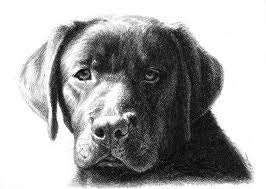
Parker “The Rottweiler” is fortunate to have the calm, southpaw Chauhan in his camp. Apoplectic tirades suggest otherwise during their doubles loss (2-3), but Chauhan “The Labrador” – two singles wins (3-2 versus Naylor and Hudson) – is instrumental despite reigning champ, Parker’s timely skinning of Naylor (3-0).

Keep on Runnin’

“The dread of getting old is a universal, if intermittent preoccupation. ‘As I give thought to the matter,’ said Cicero, ‘I find four causes for the apparent misery of old age: first, it withdraws us from active accomplishment; second, it renders the body less powerful; third, it deprives us of almost all forms of enjoyment; fourth, it stands not far from death.’”

2014 will not come around again – neither in number, nor in its sweeping assailment of great names. Football has mourned the imperious Alfredo Di Stefano (aged 88), the exquisite Tom Finney (91) and the explosive Eusebio (71). Politics/journalism has lost the ameliorative Bob Crow (52), the messianic Tony Benn (88) and the outspoken Joe McGinniss (71).

One could compare the year – if ballsy enough – with 2005 when literature lamented the departure of Arthur Miller (89), Hunter S. Thompson (67) and Saul Bellow (89) – men whose perception of that around them astounded and left in wonderment the reader and listener.

Squeezed into this life are naivety, easy optimism, flair, fear and the wisdom of knowing that we know nothing. Beyond the pallor and impoverishment of old age, however, are those ready to defy Cicero’s first cause; players and sportsmen for whom creaking knees and ravaged minds are modest hindrances.

Across eight table tennis clubs, the septuagenarians stretch – the two octogenarians in the league, Brian Hall and Colin Roberts respectively ruminating over the “continued challenge…obsession” and the perhaps unmatched feat of winning “seven Ron Hindle trophies”.

Player 2014/15 Club Born
1 Brian Hall Div 2 Hilton May 1933
2 Colin Roberts Div 4 Heaton Jun 1933
3 Alan Lansdale Div 2 Little Lever May 1935
4 Johnny Scowcroft Div 1 Heaton Feb 1936
5 Alan Bradshaw Div 2 Hilton Mar 1936
6 Keith Phillips Div 4 St Paul’s Peel 1936(?)
7 Jackie Smith Div 4 Meadow Hill Apr 1938
8 Neville Singh Div 4 Irlam Steel Sep 1938
9 Ian Wheeldon Div 2 Meadow Ben Feb 1939
10 Alan Hibbert Div 4 Meadow Ben 1939(?)
11 Brian Young Div 3 Hilton Feb 1940
12 Geoff Rushton Div 2 Farnworth SC Sep 1940
13 Mel Brooks Div 3 Heaton Oct 1941
14 Barry Walsh Div 2 Hilton Jun 1942
15 Dave Waite Div 4 St Paul’s Peel 1942(?)
16 Dave Jones Snr Div 2 Heaton 1942(?)
17 Richard Reading Div 3 Hilton Apr 1943
18 Dave Parker Div 4 Hilton Aug 1944

The bug that is table tennis surpasses the doom-like proclamations of hardy philosophers (“Wrinkles are harbingers of a slide to nothingness, not marks of a transcendence to come.”) It casts a wand over leaden feet and comfy chairs. The tales of the ‘oldies’, of the players that keep on running are but specks in a whirling universe, yet they must be heard:

Alan Bradshaw – “I did my 2-years national service from 1954 to 1956 [during which time] I won a lot of regimental table tennis contests. After winning thirteen competitions in the NAAFI canteen, I was advised not to enter any more.”

Neville Singh – “I used to play on a rolling and pitching ship in the Atlantic Ocean.”

Ian Wheeldon – “There was a room under the local church where we could practise at any time…collecting the key from the vicarage.”

Geoff Rushton – “Coached my son, Andrew to the Commonwealth Games silver medal (2006).”

Richard Reading – “First played table tennis at Bovington (Army) Camp in 1960. It led me to becoming an international athlete.”

The birth certificate of Dave Parker will be scrutinised next month. He will be the newest member of the clan, of the 70+ brigade and to Brian Hall a mere pup.


Unassailable

“He’ll know.” The words of Flixton’s John Hilton were not exactly suppliant. John doesn’t do suppliant, beggarly or any of that scraping around. He had simply nodded in my direction, somehow recalled my face from four months earlier, and assumed that I had lodged in my brain the November 2013 match score from his first encounter with Hilton A’s Mark Gibson.

I had a few things left in my tin head but that was not one of them. John Hilton, 1980 European Champion, had endured a five-set marathon on that chilly autumn night yet had managed – as with all wily champs – to plunder over the line (6-11, 11-7, 11-7, 8-11, 11-9).

Gibson’s Achilles’ heel was too much respect and a game not finely tuned after each point in the manner of Hilton. Their second foray in March 2014 was a straight-sets disaster for him (9-11, 9-11, 10-12) – fine margins but still…a beating, a whipping, a crucifying exposé. Only delusional players think ‘What if…?’

Hilton had been complimentary before the latter smash and grab – psychologically dressing Gibson’s mind, attuning it to a quiet satisfaction borne from ‘a close match’ rather than victory. As such, Gibson walked away – amiable handshake and all – not knowing that he’d been pickpocketed.

People meet, say things, interact and are either impressive or tolerated. It happens in table tennis halls, business, within families, almost everywhere. Had I remembered that they had shared 92 points in that initial ding dong, casually enunciated each set to Hilton like Magnus Magnusson then perhaps other things would have transpired.

Perhaps we would have chatted about the Frenchman, Bruno Parietti – his 1st round conquest (21-13, 21-19, 21-15) back in 1980. Or the Danish player, Bjarne Grimstrup – his victim in the next round (21-17, 21-9, 21-13). The German, Wilfried Lieck had been the first man to take a set off Hilton but John had dug in (14-21, 21-14, 21-13, 21-9).

A bruising match with Hungarian, Tibor Kreisz (18-21, 21-13, 21-18, 21-18) put Hilton in sight of glory, with the small matter of him needing to knock the reigning European Champion, Gabor Gergely – another Hungarian – out in the Quarter Final in order to reach the last four.

If you look at the twenty-two minute footage of Hilton’s exploits on YouTube you are transported to another time. The surroundings look quaint. It appears to be a tight arena. To the left of the table is an early advert for Betamax – just black letters on a white background. The picture of Gergely reminds you of Harry Enfield in The Scousers such is the enormity of his moustache and hair.

Hilton got through the harrowing match as you would have deduced. 18-21, 18-21, 21-19, 21-16, 21-19 tends to build character in a man – that or the belief that luck and the gods are with you.

Fast forward thirty three years: had Gibson known acutely that Hilton had seen it, done it, been on the rack – really studied the fortitude in those 1980 numbers – then maybe he would have conceded…grabbed his coat earlier. Statistics generally do two things to a player: have them leaning in for the scalp, or fearful, knowing that the conveyor belt is coming for them.

When Hilton smiles into the camera before the Final with Josef Dvoracek (Cze), having turned over Jacques Secrétin (Fra) – the 1976 champion – in the Semis, you know, you just know that he is relaxed. Insurmountable. Unassailable. Ready for action.

Cart Before the Horse

“When I was a boy of fourteen, my father was so ignorant I could hardly stand to have him around. But when I got to be twenty-one, I was astonished at how much he had learned in seven years.”

AGMs are generally less humorous than Mark Twain, full of froth, bequeathed ground to pensioners and those seeking a ‘day out’. They can be troublesome affairs as in the case of G4S at the Excel Centre recently, but in the main they are paper-waving, acquiescent spectacles void of excitement or lustre.

The Bolton Table Tennis League AGM on 9th June promised an array of proposals – most of them modest, a few contentious and one so overwhelming in its ambition that the league set up as we know it was in danger of being ruptured permanently.

Forty seats excluding the big three traversed this cavern at the Hilton Centre, Horwich. Early arrivals had the choice of green or orange plastic, and brown or orange leather. Strangely enough, most wanted a head-on view of the proceedings and so the leather furnishings running down the left wall were largely neglected until seconds before the booming croak of General Secretary, Roy Caswell got matters underway.

Either side of the top man were Match Secretary, Brett Haslam wearing a grey T-shirt and candid face, and Treasurer, Roger Bertrand staring out like Mole in The Wind in the Willows. If you wanted an explanation, a mini-ruck or tussle you went to Haslam who would willingly afford you his non-metered time.

Late entrants were Ian Lansdale in hooded top, Steve Barber catwalking coolly and ‘The Roadie’ Dennis Collier.

Proposal 1 – “…rule 5 should be amended as shown: The annual team subscription fee shall be paid upon application for entry in the League. All team subscriptions shall be paid as a condition of entry in the official handbook and are non-refundable. For a team consisting entirely of juniors, the team fee shall be one fifth of the normal team fee waived.”

It was an effort in securing the future of this splendid game. Many still perceive table tennis to be a game for relics with less cachet than athletics, martial arts or football. Kids, unfortunately, buy into grandness, stardom and money.

My ten-year-old son, Matthew tells it as it is: “None of my friends are into table tennis. They think it’s an old man’s game.” And yet the pride on his face when he umpired three summer league matches this month was, to me, worth more than England winning the World Cup.

Beneath the yawn fest of a typical AGM are things that matter. Despite the oxygen being different and the small rectangular windows being boarded up for fear of escapees, proposals come out of the woodwork which settle often year-long gripes.

Proposal 12 – “That Ramsbottom teams and players should no longer be in the Bolton & District League. That Flixton CC and players should no longer be in the Bolton & District League…”

You have to read this twice – perhaps more for it to sink in. To Derek Watmough it embodies the “nitty natty of league bosses”. To Geoff Rushton “suspensions [are] required”.

For many years now, Ramsbottom‘A’ and Flixton have remonstrated when not victorious (ineligible players, fixtures questionably shifted etc.). The “end of season ritual…had become annoying”. Fortunately, for the health of the league, the motion was withdrawn.

Scott Brown – Struggler Extraordinare

struggle

Something in his game reminds you of the divorced man getting married again. There is a kind of amnesia, a joyful, bright-eyed expectation. It is loaded up, stricken with naivety, however.

Scott Brown, Harper Brass’s Division Four no-hoper has the soft, bristled face of a baby gorilla and quite a decamped expression if things aren’t going right. His hands appear to be made out of putty. They are squidgy, nail-bitten affairs – part sausage factory, part heavy duty maulers.

The shots – mostly high-crested loopers – sail in on the other side of the table too gracefully at times, unarmed and full of conciliation. He would rather rally than send someone packing – or so it looks. For a big man, he exudes an extraordinarily high level of politeness in his play.

There is a hint of Neville Chamberlain – a willingness almost to share the points. Whether this ‘Sudetenland’ strategy is tactical, beneath the radar of mortal men, is not clear. Tennis players have been known to adopt similar ‘easing off the gas’ pacing. They have bought themselves valuable time in which to re-energise and really breathe.

The trouble is Brown is a struggler. During his Lads’ Club days in 2011/12 it took four whole months to win just four matches – a miserly 8% win record (4 out of 48); those early conquests – Nikul Ajwani, Kishan Patel, Connor Sutcliffe and Waqas Ali – inscribed in his mind to this day.

Hope comes in many forms though. Strugglers FC Moda, an Ottoman Empire football team founded in 1908 by Istanbul Greeks, finished runners-up in the 1909-1910 season. They were second only to Galatasaray. Sporting blood is in the Brown family – his granddad playing in goal for Lancashire Rebels FC in the 1980s.

Brown too has donned the green goalkeeping jersey whilst at secondary school. Was he good? “I was OK,” comes the unboastful mantra. Getting him to elaborate on anything is difficult. Not because he lacks the wherewithal, but because he is genuinely unassuming – one of the most straightforward and laid back people I have ever met.

Now, 24-years-old, signed by Harper comptroller, Kaushik Makwana in 2012 after ‘outgrowing’ the Lads’ Club, Brown – one senses – is gazing out over a sun-drenched, flower-filled field that no one else can see. His mellow disposition has managed to detach itself from the harshness of those table tennis numbers by which we are all judged: 17% (2011/12), 24% (2012/13), 29% (2013/14).

He is improving. The Scott Brown performance chart without a labelled Y-axis looks half decent. To a private establishment bent on efficiency and big returns, however, his contract would not be renewed.

What of the future? “Been playing penhold since March [2014], but I’m getting little bits sorted then I’ll be pro at penhold lol.”

Such a table tennis grip is traditionally Chinese – difficult to master for most westerners who prefer the ‘shakehand’ style. The wrist moves more freely. The player no longer has a crossover point. Given the shorter reach, players tend to stay closer to the table needing faster footwork and good stamina.

I recall Brown playing quite deep which makes such a move rather odd. Perhaps it’s those flowers again. And another marriage.


Step into the Barber’s Chair

barber

If you hang around the corridors at Harper Green Leisure Centre long enough on a Tuesday night, you will stumble across a man who claims that Steve Barber is the best table tennis player in England. No medication has yet been found on the said individual, but suffice to say the numbers do not back up such an assertion.

A quick examination of the ETTA’s website reveals that it is German-based, Liam Pitchford – with 4370 ranking points – who currently holds the coveted crown; regular matches for TTF Liebherr Ochsenhausen against the likes of Zwischenstand Dusseldorf’s Timo Boll typifying his week’s work.

Barber, on the other hand – a Bolton TTL Premier player – routinely plies his trade against relative unknowns including Frederic Turban. And his stats over the last three seasons read as follows: 35% (2011/12); 28% (2012/13); 35% (2013/14). One could say Barber is back where he was two years ago but that would be to define him incorrectly.

Rarely seen with a grimace on his face, Barber is representative of everything good about the game. Approachable, allowed out “four nights a week” by his “understanding wife” in order to pursue his mini-dreams and guzzle the odd beer, and firmly appreciative of the nourishment that the Bolton League provides, Barber views life simply yet keenly.

He is symbolic of a certain caste of men who stopped ageing at 29. The wisdom increases and the body continues its inevitable slide, but the boyish longings of yesteryear remain: a beautiful partner; meeting up with friends; a damn good TT session with the occasional clubbing shot.

Upon first meeting Barber, you wonder, you stew momentarily, you question whether anyone, anyone can be so buoyant yet sincere. There is no religious zeal about the man, no upbeat fakery – just an upturned smile; a signal to all that laughs are expected, that humorous observations need to be made.

A Ladybridge regular, one of only six men to play all 66 matches in the Premier Division this season, Barber’s proud Scarlet Letter-like scalps have included Radcliffe’s Michael Dore (44%), Little Lever’s Ron Durose (58%), Radcliffe’s no.2, Robert Hall (60%) and Hilton’s Jordan Brookes (62%).

Asked how he managed to turn over such an array of superior talent, Barber’s modesty rolled before me: “Me and Mick always have a great game. To beat Mick I have to work hard. Rob is a very good player but can easily get frustrated with his own game which he did against me. I beat Ronnie at Ladybridge away from his comfort zone of Little Lever and their table. Jordan’s mind was somewhere else that night (I think).”

After the grit and grind of the Winter League (September–April) comes the somewhat gentler Summer League (May–July) which manages to harness man’s goodwill in a manner which would be inconceivable in the preceding months. A cascading ding-dong of sorts, Barber perfectly captures the essence of two of its entrants: “My old teammate, Johnny Scowcroft after every winter season finishes phones me and tells me I am playing in the summer league with him.”

No switching tracks for Barber (best not mention Heaton). No letting pals down. Just grounded loyalty. A rare man he is indeed. Perhaps the Harper Green fellow was right all along.


The Bandit Hits Town

bandit

Bandits, hustlers and ringers all descend from the same family line. Generally speaking they have had parts in old Westerns (mixing it up with Clint Eastwood), have hung around pool rooms waiting for the notes to stack up or have stood on the first tee at golf clubs with concealed smiles (their better scorecards destroyed before the hearth).

Raymond Isherwood, table tennis’s 94% man from Division Four and bit-part 27% man from Division Two must have perfected the position of his holster for he regularly slays summer league opposition courtesy of his blazing ‘8’ handicap.

Controversial and unwieldy such a buffer appears to be – at least to the players that stand ten or eleven feet in front of him; the number impaling their senses given its preposterousness.

Isherwood himself is only semi-contrite: “Yeah – it’s wrong, but I’m not moaning.”

A somewhat stocky player, not obviously skilful or threatening, Isherwood serves the ball as if making bread. His hands belie the archetypal clumsiness of the ‘big man’, turning the ball into a spinning piece of dough, floured up and ready to bake.

The results so far – assisted by his mesmeric serve – have been methodical if slightly tainted by the furore which surrounds this particular competition each year: 11-7, 9-11, 10-12, 11-9, 11-5 versus Paul Brandwood; 8-11, 11-7, 11-9, 11-2 versus Bob Bent;  6-11, 11-6, 11-2, 11-6 versus Krishna Chauhan; 10-12, 11-9, 9-11, 11-6, 10-12 versus Wilson Parker; 11-4, 12-10, 11-7 versus John Biggins; 11-7, 12-10, 11-2  versus David Holden.

Apart from the Parker reverse (at one stage prompting the titanic cry of “He’s five-nil up!” just a point into the set), the Isherwood cruise ship has ploughed through big name after big name. And it is this leisurely ice-breaking which has led to calls for a further revamp of the handicap system.

How can this man be ranked alongside Division Four’s 29% player, Scott Brown the critics demand when he is three times more successful? How can he be three shelves lower than the Ladybridge duo of Brian Greenhalgh (handicap 5) and John Cole (5) when he recently sent them stumbling to relegation courtesy of three and four set victories in the winter league?

Born in July 1991 and a carpet fitter by trade, Isherwood – one could say – has been given the opportunity of smothering his opponents with underlay before the play has even begun. Invited into the ‘last man standing’ wonderland of unburdensome competition, he has taken full advantage of this bountiful scheme like an otter discovering a fish bar.

Apolitical, yet with the teeth of Tony Blair, Isherwood when not playing ‘the bandit’ is actually an astute player. Coached diligently by Billy Russell and a regular attendee of Hilton’s (unofficial) “Pro night” each Thursday, his game in the medium term is expected to be that of a Division One player.

“Lower working class” beginnings have not halted the man from Gilnow. They have merely instilled greater tenacity and fight. And such is the commitment of Isherwood – another product of the Bolton Lads’ and Girls’ Club – that his notorious pre-match meal of burger and coke has been replaced with steamed chicken and water (and a splash of Thai boxing).

Asked if he has any heroes, he replies “No” but then thinks again: “My dad due to his determination.”


Sandford the Sandman

sandman

There can be fewer noisier players on the table tennis circuit than Hilton’s latest recruit, Josh Sandford.

Set alongside the league’s current controversy overlords, Paul ‘Mad Dog’ McCormick, Mark ‘Clubber Lang’ Martin and the heaving tension which resides between Premier rivals Ramsbottom ‘A’ and Flixton, Sandford would appear to revel in his new-found acting role.

The purveyor of sarcastic witticisms and verbal musings, Sandford will undoubtedly be misunderstood in many quarters. His occasional bombastic ravings will be met by a peeping through the dividing curtain and admonishment from his fellow amateurs.

Escaping or evading the Bolton Table Tennis League’s iron clad rules is beyond most and Sandford, it is predicted, will come a cropper at some point in the near future if without restraint.

A cursory glance at the Code of Conduct suggests the potential shackling of even the land’s least volatile personages (Postman Pat and The Beano’s Walter Brown, be warned!):

“All players must show respect for their opponents, umpires and spectators by conducting themselves in a sporting manner. Gratuitous swearing, intimidation or misuse of equipment must not take place at any time on the premises of any match under the control of the League.”

Born in September 1993 and introduced to the game under the stewardship of unorthodox Frenchman and bearded wonder, Roger Bertrand, it was for Sandford – as with many unfocussed teenagers – a revelatory moment, a trip to the table tennis orphanage or rather the Bolton Lads’ & Girls’ Club.

“I started going to the Lads’ Club when I was about 14 to stop me being on the streets causing trouble. I didn’t start playing TT ‘til I was 15 and I loved it from day one.”

After the ‘orphanage’ or feeder club via the steady duo of ex-Ladies no.1, Andrea Holt and Division One flamethrower, Graham Clayborough, Sandford donned his frame with the red and black training gear of Farnworth TTC.

Taught the technical aspects of the game by the 5-times National Champion, his game developed well. In the 2011/12 season, he played across two divisions and ended with the respectable win percentages of 50 (Division 2) and 84 (Division 3).

For an 18-year-old, it wasn’t explosive or likely to augur a rush of scouts, but it was noticeably decent in what was only his second full season.

The real flash pan stuff came the season before in what was a temporary cloaking into musketeers of the apprentices and the master – Craig Duncan, Sandford and Bertrand scooping the 2011 Warburton Cup under the guise of Hilton F.

Benjamin Disraeli once said: “Youth is a blunder; manhood a struggle; old age a regret.” Sandford, in 2014, may just be on the cusp of something truly good in order to escape such a fate.

Humour still drives him (understandably so). He has the obligatory youthful passport of a large tattoo and often speaks above 65 decibels, yet his planned 2014/15 Division One team including Wilson Parker and Craig Duncan promises to be a Hadron Collider of sorts.

Either that or a derailed train. With ‘The Sandman’, you never quite know.


Brandwood Finally Shows his Mettle

brandwood

The week after the Winter League season ends, Hilton Table Tennis Centre plays host to the Divisional and Warburton Cup finals. Days later, a different kind of show comes to town.

Call it the Oscars. Call it a ‘plumped up cushion’ of an evening. The Closed Championships are – to many – the highlight of the season; a bountiful gathering of kith and kin.

It is the one night when you see a solitary table basking in the centre of the hall – plastic chairs, not seen in an aeon, prized out of the storeroom to accommodate the merry and expectant crowd.

There are no tuxedos or ball gowns on display, no paparazzi (with the exception of the odd graceless snap from a mobile phone), but rather a sea of faces awaiting the multitude of talent.

Six finals offer solace and comfort to those in attendance – table tennis bats occasionally fluttering through the air like the webbed wings of their namesake.

In the growing crowd, you see the familiar faces of Dave Parker (flat cap and white tash), Malcolm Rose (blue-lined coat and glasses), James Young (mysterious girl in tow) and Barry Walsh (bob hat and a smile that refuses to retire).

Practising beforehand is the Stiga-clad 10-year-old, Amirul Hussain in readiness for his Junior Singles final with 16-year-old, Wilson Parker. It is reminiscent of when the gifted Danni Taylor used to entertain the crowd before the night got under way.

Except, Amirul is the ETTA’s 7th-ranked ‘Under 13 Boy’; he thus addresses the table with the composure of a starship commander. Parker – his name familiar to aficionados of the Bolton game – is quarrelsome at times, intolerant of his own deficiencies. Hussain, the shorter player by about a foot, whistles through this encounter (11-5, 11-9, 11-3) with panache.

Parker need not despair though. A Handicap Singles finalist also, retribution may be his against ‘Le Roadie’, Dennis Collier. Collier, famous for his defensive meanderings, loses the first set 11-9 – the Parker +3 handicap proving invaluable. After that something cracks in the Collier game and Parker rolls home 11-5, 11-5.

There is a conflated hush and buzz about the place this evening – a sense that the matches before us are part of a wider whirlwind. And we are in the vortex of its shifting swirl.

Next is the Handicap Doubles – the grey-haired, Keith Dale and Lancashire belle, Annie Hudson versus Steve Hathaway and Dave Scowcroft. It is the only four-setter of the night: 11-4, 11-13, 11-8, 16-14; plenty of nerve from the grinning assassins, Dale and Hudson.

Interspersed between these matches is Paul Brandwood. I had a duty in storing up his results, in lingering with the hard statistics of this man. Why? Because despite his modest Premier win percentage (52%) and the gulf between himself and the elite (85%+ men), he can turn it on if he chooses.

On the way to his three finals Brandwood weaved his way past some of the lesser names, but he did it in the manner of a seal swimming through a kelp forest. It was, on occasion, like witnessing a re-signing of the Magna Carta.

I cannot say any more.

Results

Veterans (40+): Brandwood beats Collier 11-8, 10-12, 11-5, 3-11, 12-10

Level Doubles: Brandwood/Mick Dore beat Collier/Steve Barber 9-11, 11-9, 4-11, 11-8, 11-8

Level Singles: Brandwood beats Barry Elliott 11-5, 11-4, 12-10